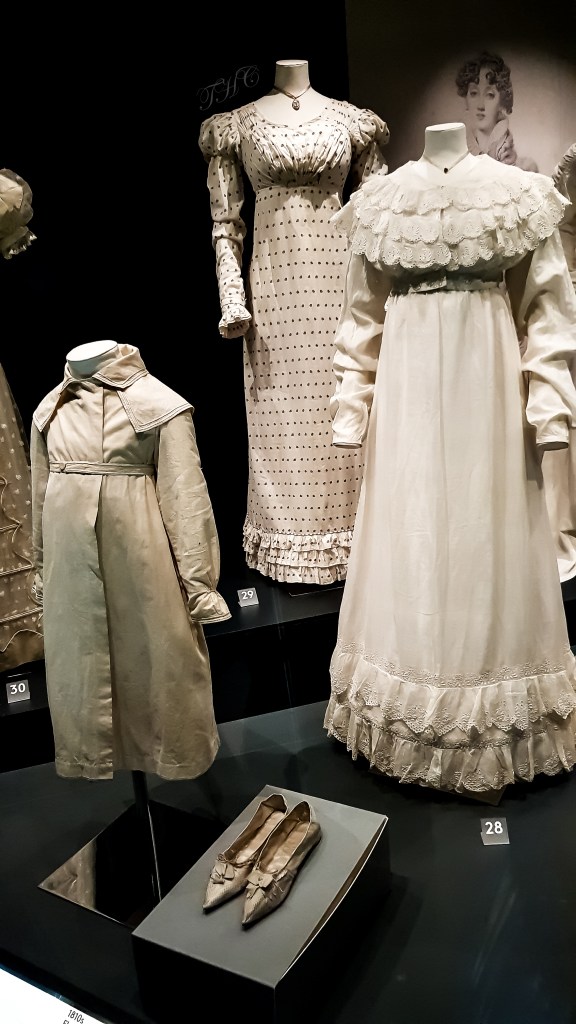
One of the photos I took back in 2018, showing early 19th century garments. Pristine quality!
Historians, Archaeologists, Antropologists, Art Historians, you name it – everyone who studies the past eventually finds their way to a Museum. In my case, it happens far more than eventually. Whenever I have a holiday, I usually opt for places that allow me to visit Museums and Historical sites. In my case, and maybe yours too, it’s one thing to look at photos of a piece of History, and another to witness it in person.
One of my favourite Museum visits thus far was the one I made to the Fashion Museum in Bath, Somerset. I visited in 2018, back in the good old pre-Covid days, and it was one of the best-organised and largest collections of historical clothing I’ve seen thus far. The pieces span from the Georgian era to the 20th century, and for someone who really enjoys Historical Reenactment (I like to dress up like a Jane Austen character : D), and who is writing a novel set in the Regency period, looking at these very well-preserved outfits in the collection was a very happy moment indeed – not to mention the Museum is housed in the Bath Assembly Rooms, founded in 1769 as a place of local gathering.
It was also a pretty special experience because I went with my friend, @chloe_made_a_thing (you can find her on Instagram), who is the only person I know that gets as excited about this as me, and is a very special and disgracefully underrated historical seamstress, whose creations I hope to see in a film one day (you got this ma’am you got this).
Museums have been one of the most affected sectors during the pandemic. I deeply admire the hard work that workers of museums all around the work put into the preservation, interpretation and organisation of History, and this is a moment for me to express my gratitude and hope of a bright future for this important part of the cultural sector.
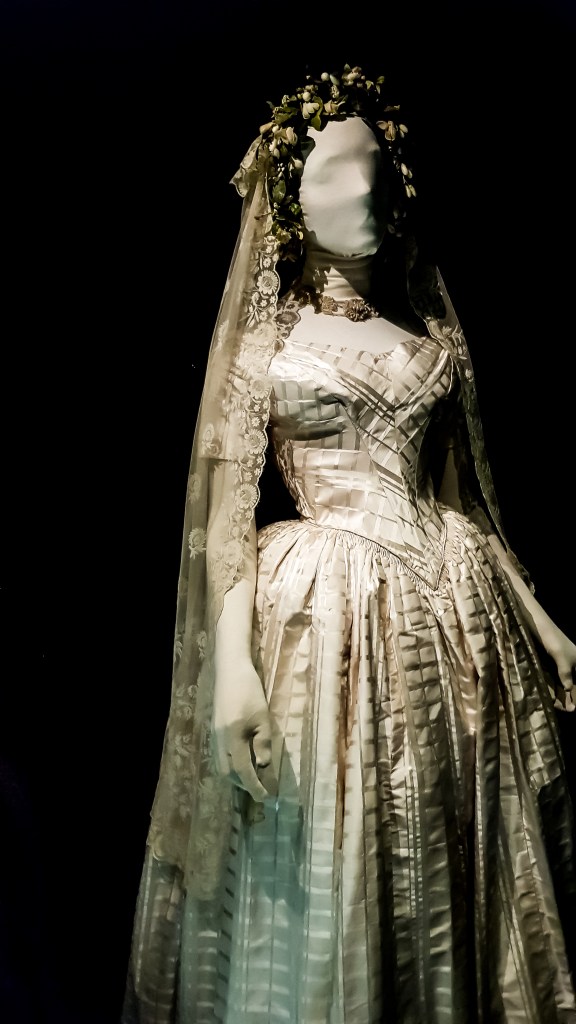
A wedding dress of a later period, c. 1840-1850
My love for museums comes from childhood. I used to go with my parents all the time, and that was decidedly influential; back then, there were also plenty of fieldtrips with school. I used to work with children and teenagers, and soon realised there was a great deal of difference between telling them something and showing them, which is why I find these visits so crucial to promote learning and an interest in the past.
Twinkl also have a wide variety of history resources on their site. We participated in Twinkl’s Museum Day campaign in order to raise awareness and support local museums that have struggled during the pandemic. Alongside working towards a good cause and a welcome return to normality, Twinkl also has some resources around all things history, aimed for KS3 and GCSE aged children. For example, have a look at their FREE humanities taster pack.
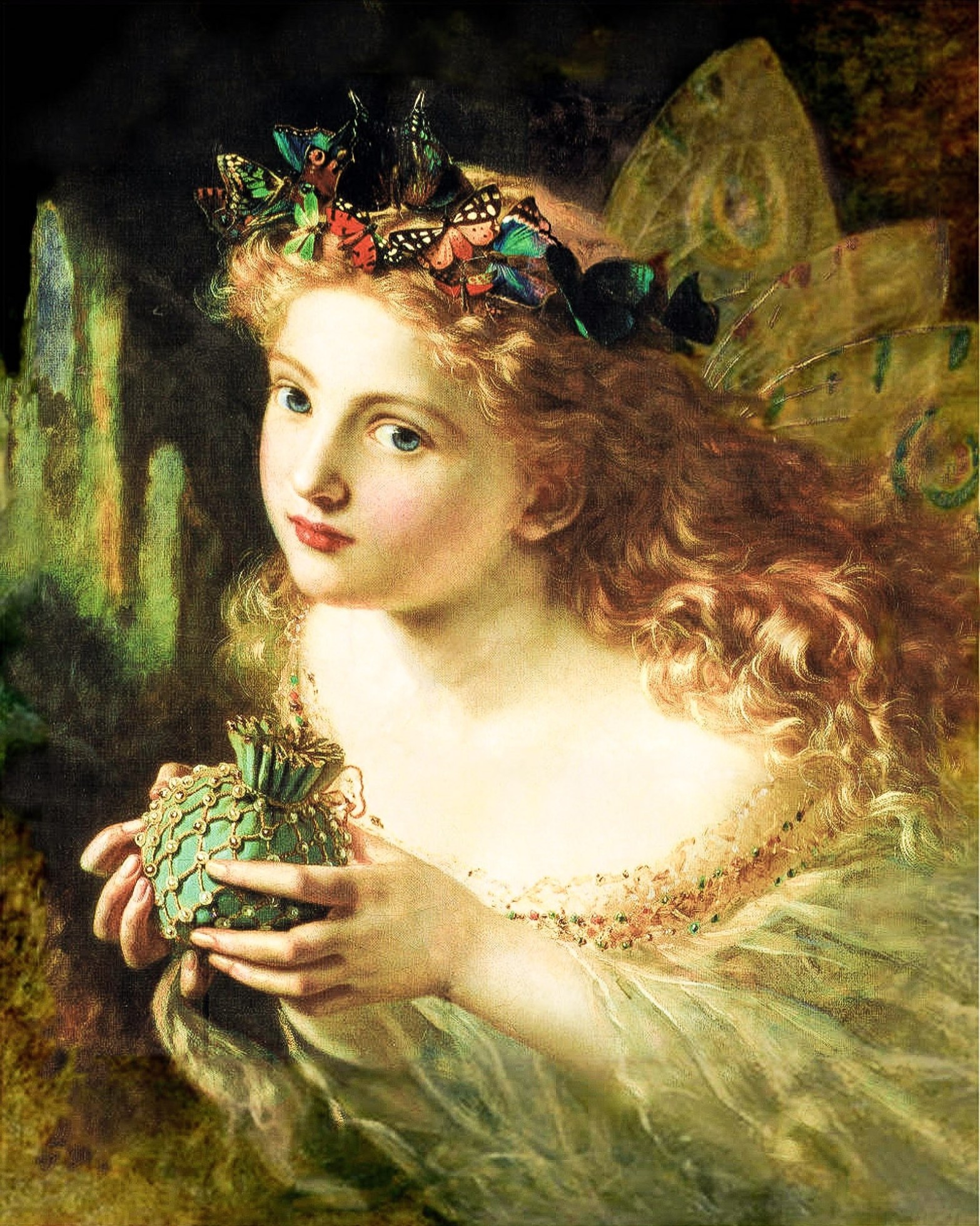
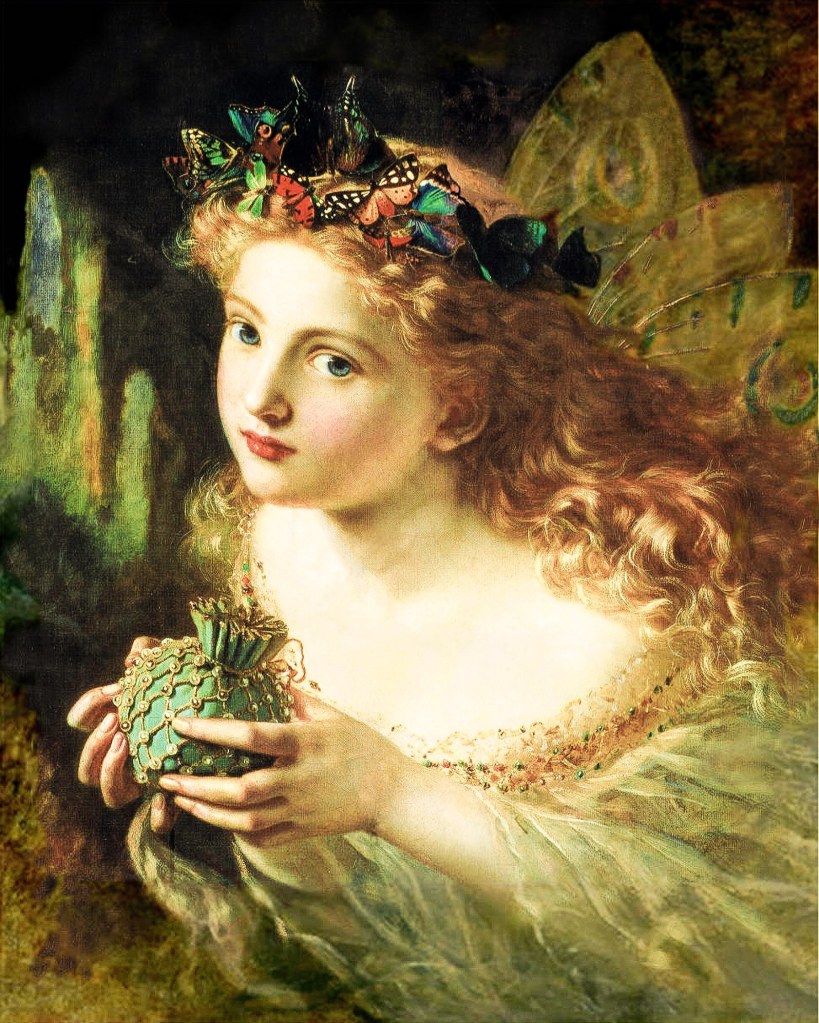
Take the Fair Face of Woman, 1869. Private Collection.
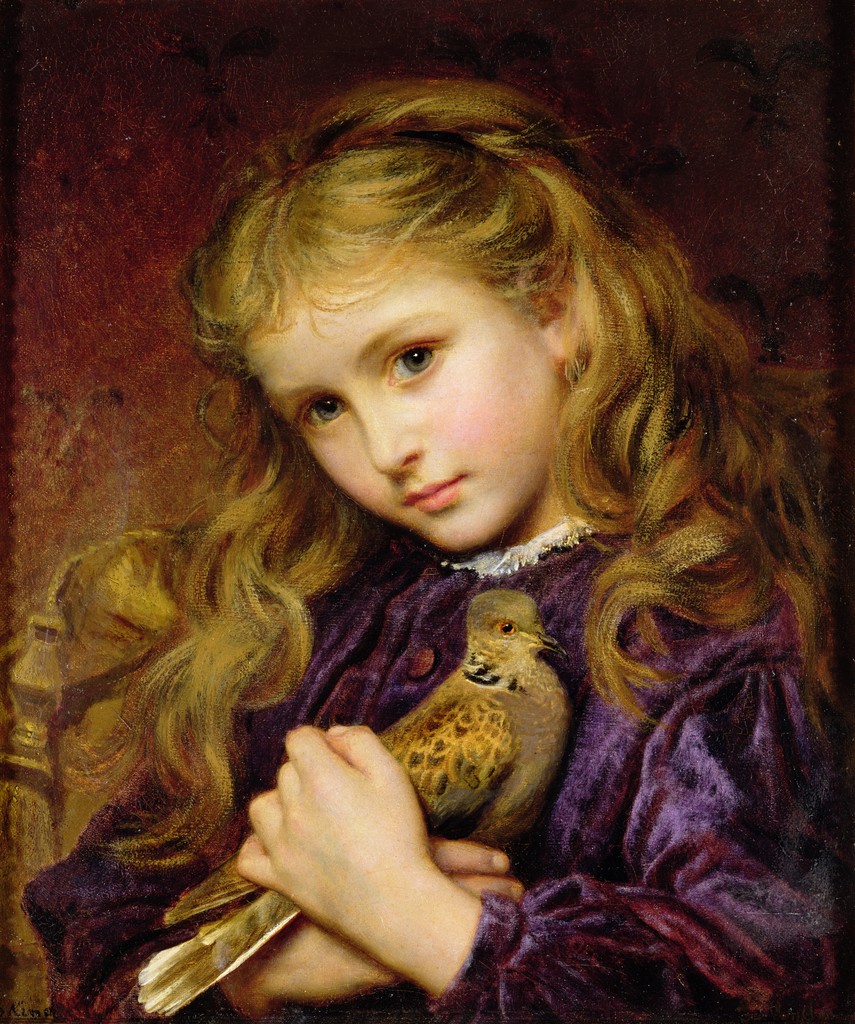
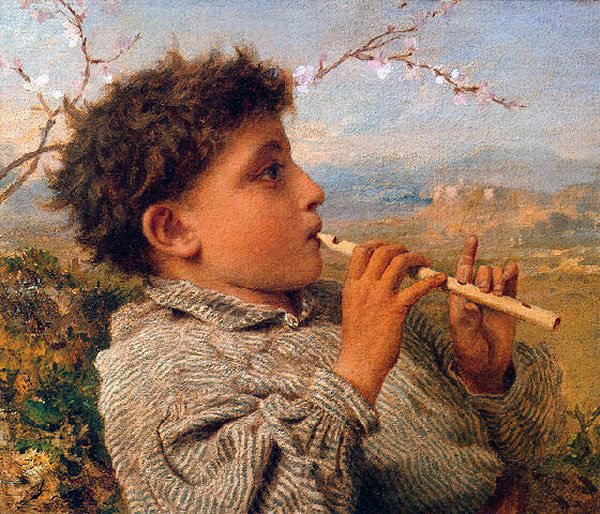
Even though Sophie is one of the most prolific painters in the 19th century – if you use Pinterest for browsing art, you’ve almost certainly found one of her works by now – there is not much easily available information about her. Even her exact birth date is a mystery: born in the troubled Paris of the 1830s, Sophie and her family would quickly become wanderers.
Sophie was the child of French father Charles Gengembre, architect, and British mother Marianne Farey, daughter of geologist John Farey. Her parents married very young – her father was around 18, which is a fairly early marriage age for men in the Victorian period. The family lived between France, London and the United States of America.
The Turtle Dove, c. 1900. Private Collection.
Sophie’s interest for art developed in an early age, and she is believed to have been mostly self-taught. The one exception is the period she is believed to have studied with painter and lithographer Charles de Steuben in her early 20s.
Most of her themes are subjects of Nature, or ideal representations of young women and children, as well as animals and still life. They were fairly popular during her lifetime, and Sophie had a successful artistic career. Her paintings were exhibited in galleries, her illustrations took part in book compendiums, and she worked at making coloured prints (chromolithography).
Shepherd Piper, 1881. Private Collection.
In her adult life, she kept moving around a lot. She went from Pennyslvania to London, from London to Capri, from Capri to Falmouth. She married Mr. Walter Anderson, an artist himself, and they were both productive all their lives. Their stay in Capri was partially made in function of Sophie’s health, but the fact it had become an artistic hub may have also been of consequence.
A sentence I often repeat through my posts, but never fully explained. Why is it that Ancient History researchers are so often drawn to the 19th century? Even in the best of chances, if we consider the Western Roman Empire fell in the 5th century of our era, 1400 years separate our object of study and the dawn of the new era that follows the French Revolution.
There are many good reasons for anyone to love the 19th century. The years between 1801 and 1900 are a period of change in every way. Never before had the world seen such a period of economic and industrial growth. Never before had the population increased in such a fast rhythm. Many people started believing in progress and developing positivist views on Mankind: after the long years of Mannerism, Baroque and Rococo, the brilliance of external appearances shifted towards that of machinery. With aristocracy no longer attempting to be a human work of art, with the old courtly rituals giving place to private life, you see other stars arising: trains, ships, steam engines, agricultural inventions, mechanic looms. The poorer extracts of society, those suffer just as much, perhaps even more so: women and children now work in factories from morning to night, men are trapped within coal mines. One cannot hide the ugly side of progress. But the good side cannot be ignored, either. Medical advances, cultural changes, slow but steady fights for human rights, the 19th century was the central stage of many, not to mention the new styles in Literature and Painting that entirely break from former patterns.
The interest in History also grows. We cannot entirely credit it to the 19th century, of course. Even through the previous centuries, the world started looking back in time, trying to understand where we came from. The Greek and, especially, the Romans, started rising from the ashes of their past empires. Monuments started being observed and sketched. Archaeology begins making itself known. In the 19th century, with the growth of large-scale, worldwide empires, it is natural that many would feel drawn to what they felt would be their natural predecessor, and the studies in Ancient History begin to grow in frequency and importance. Even today, we use the works of Theodor Mommsen, who looked into the History of Ancient Rome in the latter half of the 19th century.
This is also the time when the Medieval fallacy, if you will allow me the expression, begins to grow. The notion of a great cultural setback and of the Dark Ages that follow the fall of the Roman empire develops, as does the idea that Rome was the greatest expression of Mankind’s capacity. It would take a very long time for the Middle Ages to be rehabilitated, for the very word Medieval to lose the negative sense. Nowadays, we know better than that: the world inevitably changed after the fall of Western Rome, but the only reason we may call it a Dark Age is the lack of writings reaching the 21st century. The world did not suddenly awake in the 15th century for the Italian Renaissance. History is a continuum, and without the progress made in the Middle Ages, you would not have the boom that follows. Let’s give the Middle Ages more love and look into Archaeology to understand them, and acknowledge the great works that never made it to our time – this being said by someone who studies Ancient History.
In fact, History is a continuum to an extent where we could say Rome never truly dies: it is merely transformed. Many languages spoken today are essentially deturped Latin. Much of our Law code is a mix of Roman and Visigoth Law. The roads we have today often run through the ancient itineraries of Roman roads. The Ancient World left its mark in fields such as Architecture, Medicine, Astronomy, Philosophy, to an extent it often feels we are not making anything up: we are just improving what they left. This is true in the Middle Ages, especially in the Southern European world, where the memory of Rome was still intensely alive and very much preserved.
A Historian must be honest, and historical honesty involves looking into the Good, the Bad and the Ugly. The 19th century glorified the power of Rome, and undermined the Middle Ages (save certain literary and artistic currents). The former is progress, the latter is a return to Nature. It is not quite so, and virtue lies in balance. But people are a product of their era. 19th century interpretations of Rome were closely connected with the importance to explain the growth and strength of Empires. They looked back and drew their conclusions. And here we are now, looking back at them.
As we enter the Georgian era and the Regency period, during and after the time of the Napoleonic wars, we see the Romans and Greeks knocking on people’s doors. This is reflected even in clothes, especially for women. The wide panniers of the 18th century, the wigs and the rouge, are replaced by a natural look, by Greek designs for dresses that create a Classical silouhette. Houses begin being built with different styles, adding columns of the ancient Roman domus and temple. Themes of Greek and Roman mythology appear in painting and sculpture and become immensely fashionable. Their fascination is immense. I can understand them: my fascination is immense, too. The 19th century ends up being a period when the Greek and Roman ideals are adopted and modernised, and such is made by a society which, in spite of all its differences, is beginning to look a lot like us. The 19th century shaped who we are today in a very determinant manner. Much of its morality and ideas subsist, even if we don’t often realise it. It gives me, the Ancient History researcher, an opportunity to sink into the Classical world, but a renovated Classicism. How can I not love it? Their love was such that now we study something called Classical Reception: how recent eras interpret the Ancient World.
Hence, the Roman world is my spouse. It is what I truly love sinking into and studying, whether we are talking of the Republic or the transition into the Middle Ages. The era to which I am most faithful and always return, and the era which I feel I can contribute to the most. But the 19th century is my lover. An era which retrieves the Ancient World and gives it a new shine (often glossing over the nasty part, that is certain). It is also an era of intense diplomatic efforts on the side of fascinating figures, like Queen Victoria, which makes it immensely appealing. It unites the past and the future to come in a cohesive manner. All is simultaneously new and old. Traditional and progressive. All combined with a mix of polished refinement and raw crudity, almost coarseness, at times. The world moves forth, and the people moved with it, but did not run after practicality. When I look at the 20th century, especially after the First World War, I see a racing world of quickening haste, a speed that never slowed down, at least not until Covid forced us all to take a deep breath. The 19th century allied the haste for the future and the love for the past, a deturped past, that is certain, but an important stone in the path of future Historians. For me, a Historian, that period is particularly appealing: the inevitable march of progress walking hand in hand with a refusal of entirely giving up their core (just look at Queen Victoria!). The 19th century can be a cruel and biased mistress, but it is immensely rewarding, when you sit down to look at it.
And the other Historical eras? They perfectly fit an inevitable truth: that History is carried in Historians’ hearts, as the only way of growing is to know oneself, and the only way for Humanity to grow as a whole is to understand where it came from. They’re all my lovers, in their own ways. Except some are for more occasional conversation, whereas others, I shall walk with them hand in hand and take long walks on the beach.
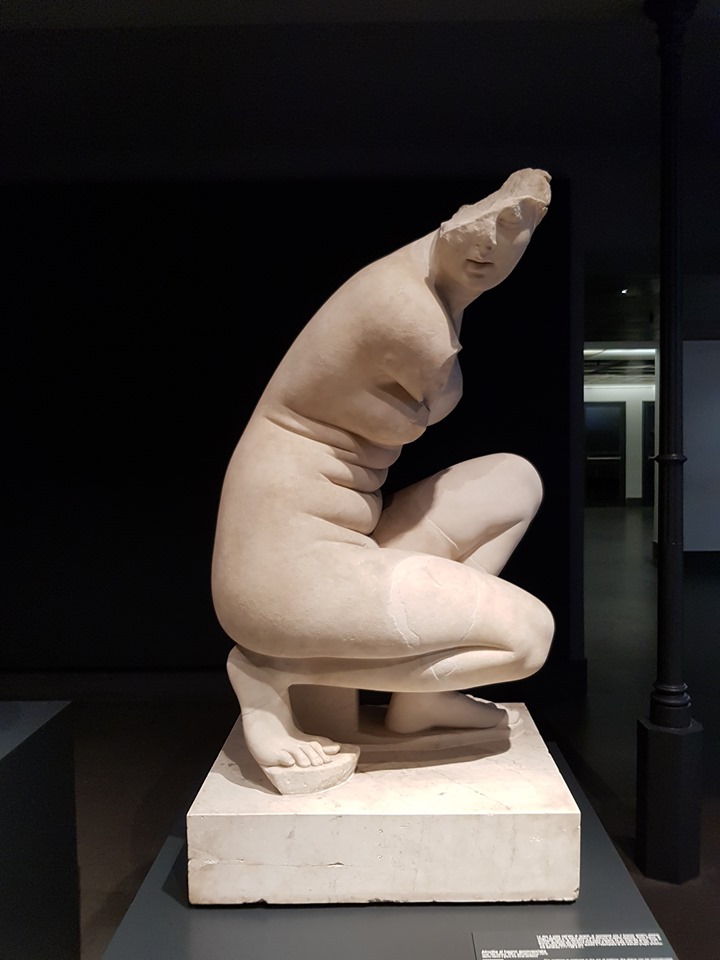
Photo of a statue of Goddess Aphrodite at the Palazzo Massimo alle Terme, Rome, 2018.
We all know Game of Thrones / A Song of Ice and Fire is mostly Medieval in inspiration, no one can deny it. The author took a lot of ideas from historical events such as the Wars of the Roses and the Norman conquest. That does not mean, however, that there isn’t quite a lot of Classical inspiration. From ancient symbols to figures and ideas, if you look attentively, you can find quite a lot of comparisons. The one I’m bringing today involves Cersei Lannister and Robert Baratheon.
For those of you who did not closely follow the story, I will make a quick summary. Cersei is the daughter of one of the most powerful men in this fictional world, the Lord Tywin Lannister of Casterly Rock. When the Targaryen were ruling, her father tried to arrange for her to marry the heir to the throne, Prince Rhaegar Targaryen. Rhaegar’s father, Aerys (aka The Mad King), went with something else instead, and Rhaegar was married to Princess Elia Martell of Dorne.
As several noble houses started to be contrary to the king, whose attitudes were becoming ever more erratic, a few events triggered civil war. Aerys burnt Rickard Stark alive, and was also responsible for the death of his eldest son, Brandon. Several other nobles were killed as well. Lyanna Stark, his daughter, was kidnapped – according to the official version – by Rhaegar Targaryen, which was the ultimate casus belli.
Since Lyanna was betrothed to Robert Baratheon, her disappearance caused great outrage. Together with the execution of the Stark patriarch, there were enough motivations to raise banners in rebellion. According to the show, Lyanna actually went with Rhaegar voluntarily, but whether the books reflect that or not, it matters little to our story. Robert won the war and the throne, but Lyanna died in childbirth.
Robert did not get Lyanna back, but he was now king of the Seven Kingdoms, and had the need to cement their safety. His marriage to Cersei Lannister would be a warrant of the safety of the realm. Cersei was young, from a very important and wealthy family, and quite beautiful- according to her uncle, a “rising sun”; but for some reason or the other, Cersei never did captivate Robert, who practically came to hate her. Still stuck to his love for Lyanna – and I’m not going to question Robert’s love here – and clearly unwilling to care for or respect Cersei, Robert did nothing to make their marriage less of a penance. And neither did Cersei, who grew more and more bitter as time went by, and relied mostly on her secret liaison with her twin brother, Jaime, for the sake of her… sanity, perhaps.
Unfortunate and unhappy marriages were not uncommon in a time when people had to forcefully marry a person they had often never met, usually for dynastic or economic reasons. This is a practice that comes as no novelty in the Middle Ages, but becomes ever more prominent as a system of blood-based aristocracy comes to rise. The urge to preserve noble blood and the importance of past names would lead to many Cerseis and Roberts in our actual historical past. If one looks even further back, however, one will find the idea of arranged and unhappy marriages is not introduced during the Middle Ages. The Greek and Roman worlds alike also had political marriages, although divorce was definitely far easier. And the notion had some reflection on their mythologies.
There are two notorious (but by no means exclusive) cases in Greco Roman myths that one can compare to Cersei and Robert. They involve some of the main deities in the Pantheon, and are well-known through film and television. The first is that of Zeus/Jupiter and Hera/Juno, whereas the second would be Aphrodite/Venus and Hephaestus/Vulcanus.
Let’s go one at a time.
Zeus and Hera:
Their story did not begin in happy manners. After Zeus had won the war against the Titans and became ruler of Mount Olympus, he took a fancy to she who would be his future wife, but Hera was not having any of it, and so Zeus had to resort to magical stratagems to compromise her and essentially force her to marry him (there are many nuances to this story, but bear with me). Their marriage was one of the Hierogamies, the Sacred Weddings in Greek Myth, and in theory would represent the conjugal home, the domestic space, etc. This would have been easier if Zeus had not decided to fall in love with half of Greece (both with men and women alike, something which is often not mentioned), and started having children with mortal women. A jealous Hera would become aware of the existence of many such children, and she would try to make their life miserable – if they died, all the better for her. The most famous case of her infamous revenge is Herakles, the Roman Hercules, who was not at all a happy lad while Hera was tormenting him.
Cersei and Robert have a similar situation. Robert, too, seeks the company of other women, most often ordinary women from amidst the common folk, and he has plenty of children out of wedlock. At a certain point, Cersei, too, will take up her revenge, and order that all such children are killed. Only one famously escapes, namely Gendry, a man who becomes a very good rower. Cersei acts like a jealous Hera, taking revenge against the bastard children of her husband. In her case, it was not merely out of spite, but also to preserve her children’s claim to the throne.
Hera and Cersei have other obvious connections. The most obvious one is that they are both Queens – THE Queen, in both cases. Hera often appears connected to lions, which are, coincidentally, the symbol of House Lannister, to which Cersei belongs. Curiously enough, Hera marries her brother, whereas Cersei has an extraconjugal affair with hers – a corruption of the myth?
Aphrodite and Hephaestus
This one has equally strong similarities. Aphrodite, the most beautiful of the goddesses, was made to marry Hephaestuss, the ugliest of all gods. As she had no love for him, she cheated on him with plenty of other deities and mortal men, the most well-known of them being Ares, the god of war.
Robert Baratheon is described as very handsome in his youth, although his looks are lost as time goes by. However, he is indirectly connected to forges. Hephaestus is symbolically represented by the hammer, in his case a blacksmith’s hammer; Robert Baratheon’s favoured weapon was, top, the hammer. An even more evident connection is seen through his bastard son, Gendry, who is, in fact, a blacksmith, just like Hephaestus. Robert is indirectly connected to Hephaestus through this imagery of forging, hammers and blacksmiths, but there is more. Like Hephaestus, he is married to a woman who does not love him.
Aphrodite will have many children, but none of those children will be her husband’s. The same happens in Cersei’s case. Three children she will have, and all by her twin brother Jaime. Both Aphrodite and Cersei are very keen on their own beauty: in Aphrodite’s case, there is that famous beauty contest where she offered Paris Alexander the most beautiful woman in the world, Helen of Sparta. In Cersei’s case, the obsession is partly motivated by a prophecy that states she will be replaced by a younger and more beautiful queen, which leads to constant comparison in which she certifies herself that she is still the most beautiful .
Although both betray their husbands, Aphrodite surely has a lot more extra conjugal affairs than Cersei, who, aside from a few exceptions, usually reserved her affection for her brother. It is hard to say whether Jaime Lannister would represent one of Aphrodite’s many affairs, as he could be many of them. He is the Knight of the King’s Guard and one of the most fighters in the realm; he shares that “God of War” side with Ares, although he could partly be an Adonis, the most handsome man. In truth, I don’t think I can make a very specific connection between Jaime and a Greek Myth character this very moment, and I will reserve it for another time, as I prefer to focus in Cersei.
Greek Religion is non-dogmatic, but the Greeks and Romans already frequently associated her with golden hair and pale skin. This association goes on through time, and it reappears with full strength during the Early Modern period, when Aphrodite is often depicted with fair-haired, often with a reddish tint (see the Birth of Venus by Boticceli, for instance). Fair hair and pale skin are also attributes of Cersei Lannister. Of course, this is also the typical medieval beauty, as such characteristics were very prized. However, this can also be yet another connection between Aphrodite and Cersei.
Interestingly enough, Aphrodite’s main assigned bird is the dove, and the dove also appears associated to Cersei, albeit not directly. Little Dove is the nickname she gives to Sansa Stark (and Sansa, as many people have already noted, is the name of a variety of apple, a fruit also associated to Aphrodite). Sansa tries to copy Cersei many times, and even when she turns against her, Cersei will still have a lot of influence on her; by extension, Sansa is a younger Aphrodite, another goddess of love and beauty; but she is also a Psyche.
The legend says that Psyche was such a beautiful princess, that people begin to worship her instead of Aphrodite. She sends her son, Eros (Roman Cupid), to avenge herself; this backfires, although one way or another, Eros falls in love with Psyche himself. This bears a certain similarity in Cersei’s relations with her two prospective daughters-in-law, Sansa and Margaery, although she is surely more lenient towards the former than the latter. She is jealous of their youth and beauty, and of the impact they have on her sons.
There is also an interesting and reversed (twisted, even) connection. Aphrodite falls in love with the mortal Adonis, as I said, and he is killed by a boar… which is the ultimate cause of death of Robert Baratheon. So here is an inversion of the traditional myth, where the husband, and not the lover, was killed by a boar.
There are, of course, several differences, too. The most evident is, to me, the fact that Cersei has no obvious connection to the sea, whereas Aphrodite, in many versions, is born of sea foam. Another one is the existence of a twin, which is absent in the myths surrounding Aphrodite. But they are both supportive of their mortal children (see Aphrodite and Aeneas), and will partake in war if necessary; they both go to their father for complaints, too. In the Illiad, Aphrodite is presented as the child of Zeus and Dione, and she goes to him to grumble about being injured in war. Cersei grumbles to her father all the time.
There’s a lot that can be said and analysed about Cersei, whether we are talking of the show or the books. She is one of the most developed characters by George R R Martin, and even though the last two books aren’t out yet, she is certainly meant for an unfortunate fate – sometimes, for her and many other characters in this universe, it seems that they almost never stood a chance, and that determinism is at hand, however much there is a whole discussion about self-fulfilling prophecies. Aye, they could have chosen not to listen to them, but in a world where magic is proven real, a world where dragons come alive and where there are dark shadows killing people in the night, it is very difficult not to become fearful of prophecy, although they are slippery sands. Cersei is like Hera and Aphrodite alike, doomed for unhappiness in her marriage, growing into jealousy and resentment. Two powerful goddesses with attributes merged into one queen.
Just recently, I was chatting with a friend who took up an interest in Latin. That friend took up the initiation through a popular language app, and said that although it was very good, it was a struggle with the explanations (and, frequently, the lack thereof).
As I was fortunate enough to learn a little bit of Latin, and as I feel it is a very useful language for everyone to learn, I’m leaving you a few important tips here that, I believe, will help English natives with the language.
It is understandable that Latin can be harder for English natives than, say, Spanish and Portuguese ones. English comes from old Germanic languages, like German, and although it inherited quite a fair portion of Latin words (the estimates give numbers between 15% and 30%), most of it has no direct correlation. And whereas German has the advantage of a closer structure, as it also has Declensions (getting there in a bit), English has not. For those of us who inherited Latin-derived languages, the process of learning is far easier, if anything because the vocabulary is still quite simple. Observe the examples below;
Latin ——– Portuguese
Aqua ——— Água (Water)
Aquila ——- Águia (Eagle)
Rex ———– Rei (King)
Canis ——– Cão (Dog)
Mater ——- Mãe (Mother)
Occulus —- Olho (eye); Óculo (eyeglass)
Aside from the obvious correspondences, we also have derived words with the same meanings. For instance, Domus means House. The Portuguese word for house, Casa, is quite different; but words related to the household have their root in Domus, such as Doméstico (Domestic, of the household). Although this can occasionally occur in English, it is surely not as frequently as it is in Portuguese, and that makes life harder for Native English speakers.
But fear nothing! My Latin teacher was quite brilliant. He once told us to face Latin as a normal language, instead of panicking about it. People were speaking it all those centuries ago, every single day! Although, keep in mind that the Latin spoken on the streets, especially by the poorer extracts of society, was surely not the Latin of Cicero, nor that which the aristocracy usually spoke. But if you understand the harder variety, the rest will come naturally.
First important detail: the alphabet.
The Latin alphabet was, roughly, the same as ours. However, classical Latin did not have the letter V. How is that, you’ll ask me, if we often see capital V in monuments? Well, that is actually a “u”. In Latin, you only have the letter “u”, which, in its capital form, is represented with a V. Therefore, if you see a transcript of a text with words such as “duunviri” (a Roman office), be aware that this is for your own convenience, and that the original Latin spelling would have been “duunuiri”. The introduction of the V is much later, and you will surely find it in Medieval texts written in Latin, but surely not in Cicero.
Secondly, the same case occurs for the letter “J”, which Latin simply did not have. Hence, for words such as Julius (popular commander Julius Caesar, for instance), the correct spelling is actually Iulius. You will also find words with two I in a row. In Caesar’s case, I usually go with the J, as it is so deeply ingrained by now; but for all other Latin words, I prefer sticking to the original I.
Thirdly, I feel it my duty to dispel a common myth. There is no such thing as Caius Iulius Caesar! What you have is Gaius Iulius Caesar. The confusion comes from Epigraphic Tablets (ancient Latin inscriptions in stone): ancient Latin often used abbreviations, and the abbreviation of Gaius is, in fact, a C. When you see a C in a Latin inscription, followed by a dot (C.), you should read Gaius.
Fourthly, punctuation. Ancient Romans did not use punctuation – they did not even have spaces. Writing was just a long continuum of letters, with no interval whatsoever. Any punctuation you find is added during modern-day edition. Be aware that, on occasion, it may change our understanding of a sentence, although this is usually not a big issue nor something to worry about, unless you’re doing an academic translation or doing actual source study regarding those matters 🙂
Ok, now that we cleared that up, let’s look into the first important point regarding the Latin language: Declensions. A fearsome word, if you’re new to it. What does it mean? Well, it means that each word will be said differently, depending on its positioning on the sentence. For instance, if you mean to say “The dog eats the fish”, you will say “Canis piscem manducat” (Canis = dog, piscis = fish). But if you want to say, “The fish eats the dog”, you will say “Piscis canem manducat”.
Depending on whether the word is a Subject, a Direct Object, an Indirect Object, or any other sort of Object (lel), it is said in a different way. Don’t panic, though. The root of the word is always the same, and the usual marks for each case don’t really change much, either. It is perfectly doable! You will need to memorise the declensions, however. And the cases. How many cases are there? Six.
Nominative case: it represents the subject. Example: Julius sent a present to Pompey.
Accusative case: it represents the Direct Object (when you ask the verb “What” or “Whom”). Example: Julius sent a present to Pompey.
Dative case: it represents the Indirect Object (when you ask the verb “to whom?”). Example: Julius sent a present to Pompey.
Genitive case: it expresses a relationship of ownership or belonging. Example: Pompey’s present was not cool. The present is “of Pompey”, it belongs to him. In English, the Genitive case is often represented by the possessive ” ‘s “.
Ablative case: every other Object in relation to the world. If it doesn’t fit anywhere else, it will likely be an Ablative. I will not give an example here, because there are dozens of chances, and you can work by exclusion X’D
Vocative case: an invocation. For instance, when you say : Gaius Julius, go clear up your room! The Vocative case is always identical to the Nominative, except for one particular cade: the masculines of the Second Declension.
Going back to Declensions, there are five. Within these five, there are respective subdivisions, as I will now explain:
Latin has three genders, just like English and German: Masculine, Feminine and Neutral. Most words in the First Declension are feminine (exceptions, for instance, being Nauta, Sailor); even when not, they’re always declensed the same way. Most words in the Second Declension are masculine (exception: tree names, for instance, such as Inuperus, the Juniper tree); they’re all also declensed the same way.
Then, for Third, Fourth and Fifth declensions, you have a division. Masculines and Feminines are declensed one way; Neutrals are declensed another way, and have their particular characteristics. We’ll get there on the following posts, where I will explain more about each particular declension, and then enter the fantastic and frightening world of Latin verbs XD Hope this was useful for someone!
Are there any documented instances of rebellion and revolution amongst the Roman, like any attempt to take over the government?
Odin’s reply:
L-o-a-d-s.
The daily life of the Roman Republic, especially during the late years and the transition into the Imperial period, was made of revolts. If you weren’t having a revolt, you weren’t living a regular day. You had revolts by the Roman Prouincias, you had revolts by the slaves, you had Civil Wars, literally everything and anything you can imagine.
Some short examples:
121 BCE – The Gracchi brothers (by names of Tiberius and Gaius) were two well-known tribunes of the Plebs who tried to introduce novelties in the agrarian laws. Several of Tiberius’ supporters were killed. Years later, his brother was going to be attacked by a mod and, allegedly, suicided on the Aventine hill. His supporters were also executed, those that were caught.
91 – 88 BCE – The Social Wars. The Roman socii, which were allied city-states, rebelled against Roman policies. Rome technically won, but the Socii eventually all got Roman citizenship just the same, and were integrated in the Roman Republic as citizens of right.
88-87 BCE and 82-81 BCE – Civil Wars between Gaius Marius and Lucius Cornelius Sulla. Marius was the great saviour of Rome during the invasions of the Cimbrii (a Germanic tribe), and was elected consul seven times (which is quite unusual and extraordinary for that day and age). Sulla actually started his career alongside Marius. He attained the control for the Mithridatic Wars, and Marius was not particularly happy about it. Amidst that and attempts to gain political control, Sulla and Marius ended up on opposing ends, and the wars may have gone on if Marius hadn’t died in the year of 86 BCE, of natural causes.
73 BCE – Third Servile War, better known as the war of Spartacus, in which Spartacus, Crixus, Gannicus, Oenomaus and Castus attempt to secede from the Roman world. It took two years to put an end to this rebellion, and it cost many thousands of lives on both sides; ultimately, the former gladiators were defeated.
80 – 71 BCE – Sertorian War. Another rebellion with a view to secede, fought between two different Roman factions; the rebelling side was commanded by Quintus Sertorius. This was set in the Iberian Peninsula, and Rome was victorious yet again.
49 – 45 BCE – Julius Caesar and Pompey’s Civil Wars. This was another long conflict between two Roman factions, and as you can see, having lasted four years, there was relative balance for a while. Julius Caesar was ultimately victorious: after having lost a battle, Pompey takes refuge in Egypt, where he is betrayed and murdered on the orders of the pharaoh. In the following years, you have quite a few revolts by local populations in Gallia, too.
From then until the end of the century, the revolts and civil wars will intensify. Pompey’s eldest son, Sextus, took a hold of the island of Sicily, became essentially a pirate, and was a nightmare for supplies traveling the Mediterranean to the Italian coastlines. Marcus Antonius and Cleopatra end up engaging in war against Octauianus. Several tribes revolt.
In 30 BCE, Octauianus wins the battle of Actium (well, Agrippa does it for him). You’d think it was all good now, but it certainly wasn’t. Gallia, Egypt, Judaea, Thrace, Mauretania, Gallillee, Illyria, Germania, Cappadocia, Alexandria, Britannia, Civil wars, Civil wars, civil wars, Civil wars… you name it. It just won’t stop.
The Pax Romana is all nice in theory, but keeping the cohesion of such a vast empire wasn’t exactly easy, and it was a process in which the border was constantly altered. Furthermore, after the collapse of the Republican system, you see the Pretorian guard becoming the first strength of the Emperor and not of the City; you see the legions connected to men and not to the state. Politics change and there are more and more manoeuvres. Quite honestly, when you reach the fifth century and the foreign peoples invade Rome, it is more of a relief to break with the previous system than anything else, although, of course, the emperors might quite disagree!
Finally, I received news from you, yesterday evening, by the telegraph of Mademoiselle Lindheim to the Countess of Lavradio, and today by the good letter which you had the kindness to write to me and which made very happy; I thank you with all my heart. I too cannot imagine at all that I have taken leave of you, but I always tell myself that it won’t be for long. I beg you, dear mother, think first of all of your health; it is a great duty that you must fulfil. It is, I believe, the priority for you now.
Life here, however, is quite tiring. It is almost 5 o’clock and it is the first moment of the day that I have for myself. This morning, after lunch, we went to Christal Palace, where we ran for two and a half hours, came back to dress, lunch, and then, for me, a reception of the whole diplomatic corps.
In a few moments we are going out with the Queen, to go to Westminster, and, tonight, we go to the opera. Tomorrow we are going to Claremont. On the 11th I leave, Pedro is very impatient, he has already wired me twice to tell me.
Aunt Marie wants to come to Plymouth, where I will embark. We are delighted to have her here, as far as I can judge by the way in which the Queen and the whole family speak of her, but the Duke doesn’t seem as well accepted, at least by Prince Albert and the Duchess of Kent; but these are only my remarks, which I only tell you, dear and good Mom, thinking that you are interested; but this should not upset you, because I may be wrong.
Farewell, dear and beloved Maman, I must leave you, because we are going out. Forgive this letter, written in haste. Papa tells you a thousand things, Leopold and I kiss your hands.
Your faithful daughter, Stéph.
I am doing very well and I am not too tired.
London, 8th May 1858.
Comment:
Aunt Marie: Princess Marie Amelie of Baden, sister of Stephanie’s mother. She married a Scottish noble, William Hamilton, 11th Duke of Hamilton and 8th Duke of Brandon. This is the Duke who seems not as well accepted by Prince Albert and the Duchess of Kent. Stephanie’s aunt, however, in her opinion, is well-liked.
Stephanie was one of the people who had the opportunity of visiting the Crystal Palace (in Hyde Park), built in 1851 to house the Great Exhibition, and destroyed in 1936 by a fire.
When Stephanie says Lunch, she actually refers to breakfast.
Her life continues as busy as it was before, with her taking up her role as Queen further and further: this time, she received the Diplomatic Corps.
It is interesting that Stephanie’s style to her mother, unlike that of the previous letter, is very similar to the style she adopts to write to King Pedro of Portugal; even more interesting is that the usually very collected King was so impatient to see his bride that he telegraphed her twice!
Stephanie is due to leave for Portugal on the 11th May 1858, departing from Plymouth.
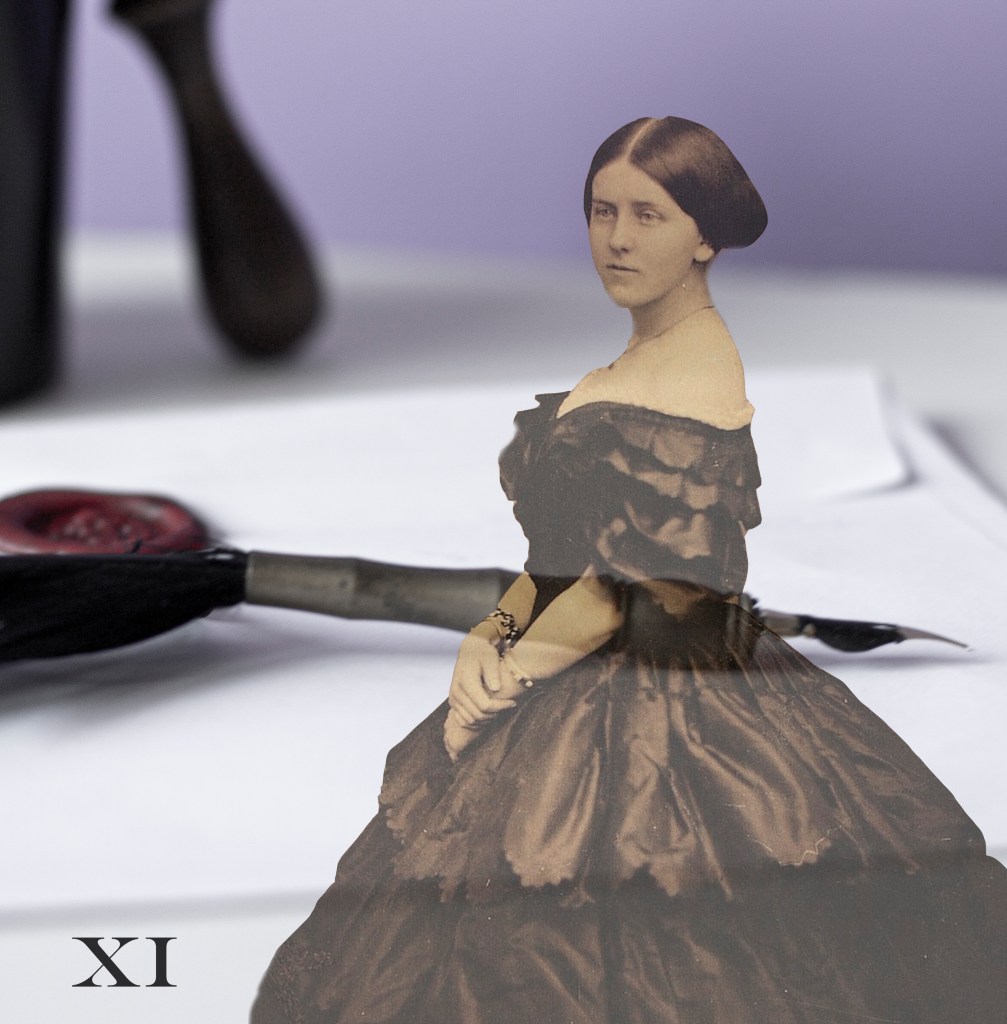
I am sending this paper to you by Léopold with these signs, because it is necessary for our correspondence by post, there are too many things without (that) of which I could not speak to you, which I nevertheless wish to do, because it is a necessity for me to be able to talk to you about everything.
[Sign of cross] Pedro. – O my stepfather. – O my beautiful sisters. – To my brothers-in-law. – E. C. our entourages. – N. The Portuguese. – Léopold can tell you everything, because we talked about everything together, our comments, our impressions etc. etc. and we were all of the same opinion. Let me envy Leopold; when you read these signs you will have already hugged him in your dear arms; I feel that, although far away, I will still live with you; keep me well informed about everything, everything, especially also concerning the brothers and Marie. Think above all of your health, dear and adored Maman, it is absolutely necessary, it is a duty before God, a duty towards us, your children who love you, as well as Papa, more than anything else in the world. Always think that we are united in God, despite the distance that separates us; it is the only and the best consolation, to make a sacrifice to God of the sorrow that we feel to be separated. – I’m happy to tell you that Leopold is loved here by the whole family, as a family member. I kiss you again, kiss your hands and am your daughter.
Comment:
Another relatively short letter from Stephanie to her mother. Letter XII, which will be posted next week, is rather short as well, but letter XIII will make up for it.
Stephanie is now in Portugal, and rather than write it all down to her mother, she trusts that her brother will tell you exactly how she feels about her new homeland, her husband, her new sisters-in-law (the “beautiful sisters”), the people who accompany her, the Portuguese people. Her brother is due to return to his home soon, and seems to be well-liked by the Portuguese Royal Family.
Stephanie is sending signs to her mother to ensure safe correspondence. It seems there are things she wishes to say that might be misinterpreted or disliked, and therefore Stephanie’s mother must rely to these safe methods so that her daughter can talk to her about everything.
On a shorter note, when she mentions Marie, she means her younger sister, whom we mentioned in a previous post.
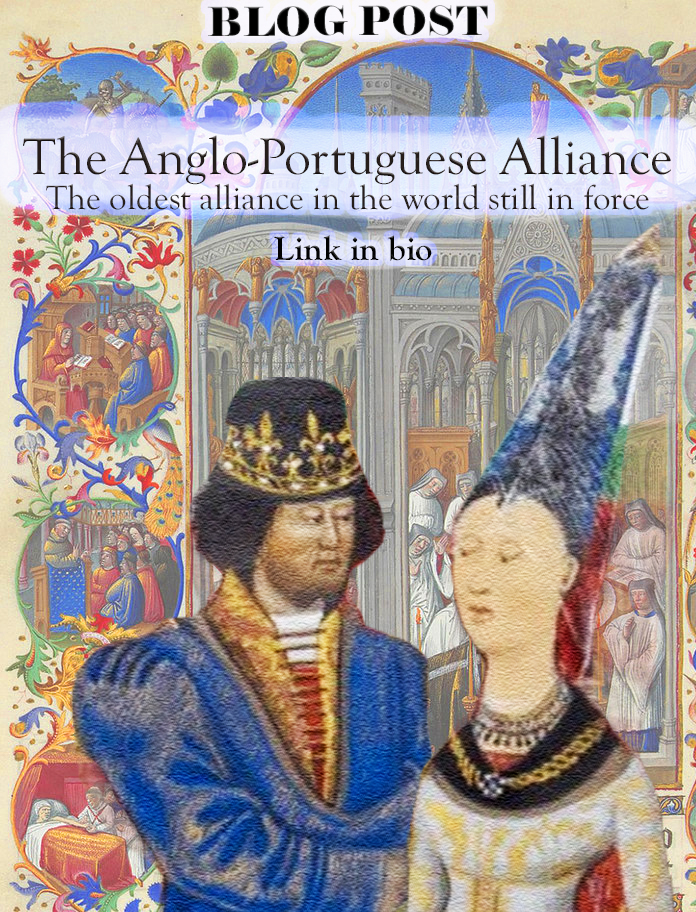
Edition of medieval illuminures by The Chronicler. The two figures are King João I and Queen Philippa of Portugal.
The Anglo-Portuguese Alliance is oldest alliance in the world still in force.
I usually don’t write about the Middle Ages. I’m not particularly great with Palaeography (the beautiful art that talented people use to read Medieval texts), and as you all know, I prefer to work directly from the source. However, there are subjects that I’m so passionate about, I end up writing a word or two about them; therefore, this is the first of (hopefully) many posts that drift a little from my usual realms of Ancient History and the 19th century.
The Alliance between England and Portugal is the oldest alliance in the world which is still in force. This is not at all related to the fact that England is very fond of Portuguese Port wine, in spite of the significant investment in vineyards by English immigrants during the 19th century in the district of O’Porto. To understand this alliance, we must go further back, all the way into the 14th century, and look into Portuguese, English and Castilian politics.
Let’s start through the background of each of them:
Kingdom of Portugal
Between 1325 and 1357, Afonso IV the Brave reigned in Portugal. This King had only one rightful male heir, Pedro, who was married to a Castilian noblewoman, Constanza Manuel. However, Pedro developed a liaison with one of her ladies-in-waiting, Inês de Castro, and they had several children together.
When Constanza died in 1345, Afonso VI thought it would be convenient for his son to marry a foreign princess, or someone who could benefit the Royal house; Inês, albeit being a noble, was not a beneficial match for Pedro. However, Pedro allegedly married Inês (whether he truly did it or not, we do not know, but he claims to have done so) in 1354. Afonso VI was severely displeased, and after a while, under the influence of other nobles, he gave the order for the execution.
Inês being executed, Pedro, who came to be known as the Just, or the Cruel, turned against his father and Civil War ensued. It ended in reconciliation, and Pedro succeeded as Pedro I, with little issue, in 1357. He never remarried, although he had other liaisons and more children; his successor was his only son with Constanza, Fernando I, known as the Handsome.
Fernando also had a fairly unpopular marriage. He was connected to Leonor Teles, a noblewoman from the North of the Peninsula (whether from Portugal or Gallicia or Castille, it is not quite certain). They had at least three children, but only one child, a girl, survived into adulthood, namely Infanta (the same as Princess, explained in another post) Beatriz.
Infanta Beatriz was married to Juan I of Castille, and the project was to unite the Portuguese and Castillian crown. However, when Ferdinand prematurely dies, at the age of 37 (year of 1383), there are several factions who do not have any interest in a political union of the two kingdoms, some for patriotic reasons, others not quite so, as is usual in such affairs. Therefore, pretenders start to appear.
As is natural, Inês’ surviving sons are amidst the pretenders; João and Dinis were their names. Another pretender is yet another João, who was a son of Pedro I of Portugal by another lady (Teresa Lourenço), born after the death of Inês. Courtly intrigue and perhaps a bit of mismanagement on the side of Inês’ sons lead to them being removed as pretenders and to flee into foreign courts, and this other João becomes the one pretender and is acknowledged as such by the Courts.
Thus begin two years of Civil Wars. João’s life may have been pretty uneventful otherwise, in a Middle Ages way: he was born on the 11th April 1357, and only came to prominence at the age of 28, in 1385, when he became King of Portugal. Wars between Portugal and Castille were a constant all throughout the Middle Ages, but they used to happen for the sake of border territories; now, João would have to fight a war for succession, to keep an entire country independent.
There were two priorities in João’s life, as of now: heirs and alliances. An alliance can also bring heirs, of course, as it is often concluded through marriage, so courtly politics immediately are set in action, and his supporters start trying to find him a wife.
Meanwhile, in the Kingdom of Castille…
Pedro I of Castille, called The Cruel or the Just, was born on the 30th August 1334, and he reigned until his death, on the 23rd March 1369. He was married quite a lot of times, and caused quite a lot of trouble. During his marriage to Blanca de Borbón, he claimed to have also married María de Padilla, who later gave birth to Constanza. Through political intervention, he manages to have Constanza and her siblings legitimised in the Courts.
In the year of 1366, Enrique II of Trastámara takes the Castilian throne. He was the illegitimate half-brother of Pedro I of Castille. As Pedro had legitimised his children by Maria de Padilla, and as Constanza was the oldest surviving child, she claimed the Castilian crown for herself.
And in merry old England?
In that sequence, Constanza marries John of Gaunt, whereas her sister, Isabella, marries Edmund, the 1st Duke of York. John of Gaunt takes it up to attack Castille and claim his new wife’s title, in her name and that of their only daughter, Catherine of Lancaster.
It just so happens that John of Gaunt had other children by his previous wife, and his eldest child was, in fact, a girl, better yet, a woman, who just so happened to be single.
Philippa of Lancaster was the child of John of Gaunt and Blanche of Lancaster. Her mother was one of the wealthiest women in England, and Philippa was the grandchild of Edward III of England and the niece of Edward, the Black Prince. After her mother died, most likely due to the Bubonic Plague, she was raised by her governess (and her father’s mistress), Katheryn Swynford; of course, scandal ensued, but Katherine and Philippa seem to have been in friendly terms, and her father ended up marrying Katheryn later in life, after Constanza died.
Philippa was three years younger than João I of Portugal. In a time when young princesses were married off rather early, she was past the usual marriageable age; however, the Portuguese didn’t see it as an impediment at all, and if João sorely needed an heir (under risk of another succession crisis if he died without one), he trusted that his marriage to Philippa would result in a child.
This alliance seems pretty much meant to be. Two people with a common enemy, who are fighting the same land; a King who needs to marry, and has lost the usual provenience of Portuguese Queens (as Portuguese Kings usually married Castilian or Aragonese ladies.
The Anglo-Portuguese alliance has roots even before all that. On the 16th June 1373, Edward III of England (Philippa’s grandfather) and Ferdinand of Portugal signed a treaty of «perpetual friendship, unions and alliances», with the expressions “Amicitae” (Friendship), “Alligantiae” (Alliances) and “purae Dilectonis foedera” (leagues of sincere affection” being used; assistance is promised by land and sea, against any enemy (yes, I did use the Wikipedia translation).
However, the probably better known moment of ratification of this alliance is the 9th of May 1386, when the Treaty of Windsor is signed, and the marriage of João I and Philippa of Lancaster is finally and definitely agreed. The pact is then fully established and enforced, and the English and Portuguese will be connected throughout History.
Centuries later, when Napoleon Bonaparte declares the Continental Blockade, the Portuguese refuse it on account of this alliance, which leads to the Portuguese Royal Family having to flee to Brazil, and to the Peninsular Wars between the French army and the Anglo-Portuguese forces.
Later, and since today (24th May) is the birthday of Queen Victoria, one can observe the deep personal and political alliances between the United Kingdom and Portugal, in the person of HM Queen Victoria and HM Queen Dona Maria II of Portugal.
João and Philippa had a very successful marriage. They had eight children together, of which mostly male heirs, which were important to secure succession. All these children were well-educated and well-learned, to such an extant that, even to this day, they’re known as the Illustrious Generation. Unfortunately, Philippa suffered the same fate of her mother, dying at the relatively young age of 55 from the Black Plague. Their children, however, had a fundamental role in the Portuguese ultramarine expansion, with all the positive and negative sides it will bring to World History.
And the alliance? Well, it’s still on, and I want to believe that the English and the Portuguese still get along pretty well!
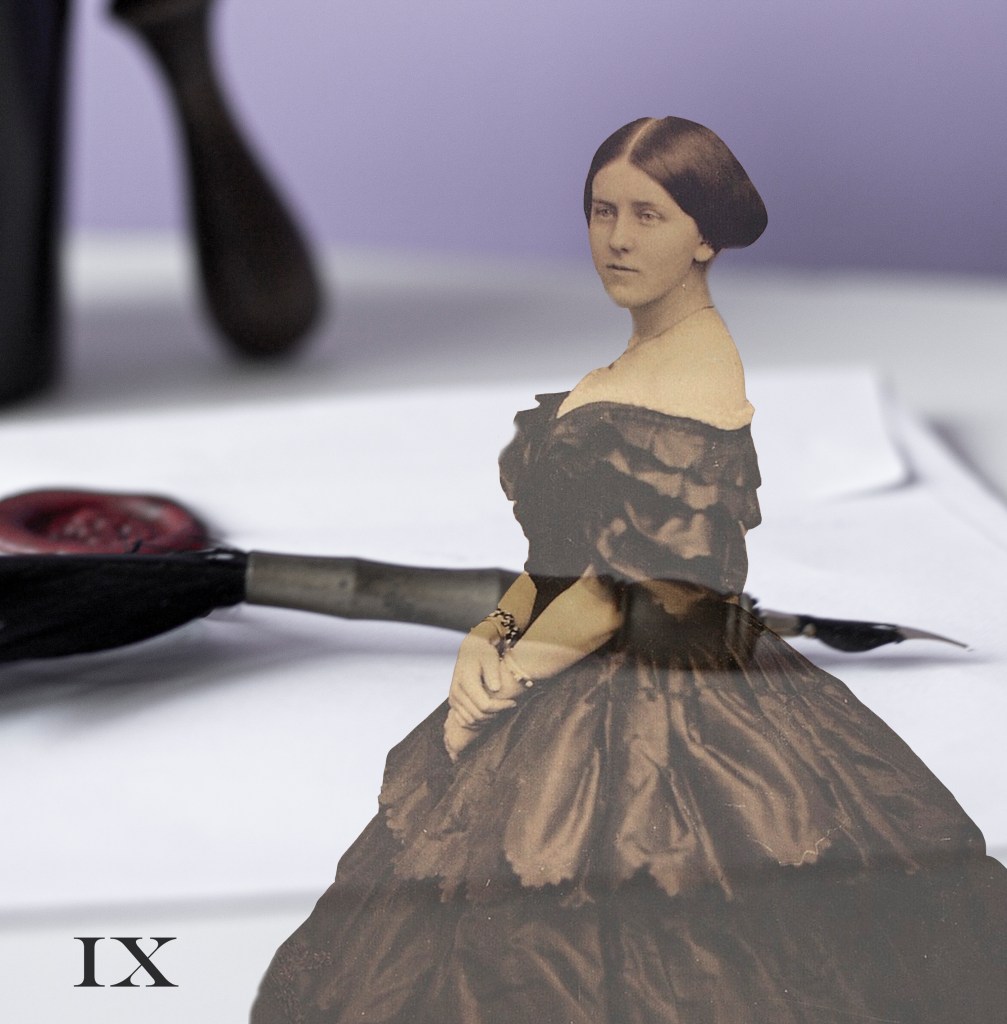
Why don’t I have news at all? I’m heartbroken and worried. The Count of Lavradio telegraphed today to Ostend, and to Düsseldorf, to learn something, but I have not yet received an answer. I beg you, write to me soon and in great detail, about you, your feelings, finally about everything, everything; you know what I mean. Yesterday evening, the Queen came to my house and I repeated to her everything that you had asked me to say to her. She is really so good and so simple, she would inspire you with confidence and sympathy, I’m sure. Yesterday there was a dinner of about 50 people, but quite tiring after the trip we had made; I was horribly tired, we all felt like we were still at sea, which is very unpleasant. At 11 o’clock we went to bed for the sake of travellers. This morning at 9 o’clock, we had lunch, then we went for a walk in the garden, which is very pretty, visited the stables, then on returning, I made a long visit to Princess Alice who is charming; I saw my ladies and now I take this opportunity to write you two words. After lunch I will make visits, then we will go out with the queen. In the evening there is a big dinner. I am thinking of putting on my lace dress with a diadem. Yesterday I had my blue dress which was found very pretty. Tomorrow, at 3 o’clock, I receive the diplomatic corps, but in a hat and morning toilette. In the evening there is a theatre play. Sunday I will hear the Holy Mass in the Lavradio house and Cardinal Wiseman has offered to say it; then I will see there all the Portuguese who are in London and who are not presented to the Court. On Monday there will be a big ball, where I can put on my tulle dress with the golden stars, well refreshed and arranged. I think it will be fine. – I must leave you now, dear and adored Maman, and give news soon to – Your faithful daughter Stéphanie.
London May 7th. – Aunt Marie will come, I believe, to Plymouth, where I will embark; she is in Paris at the moment. I tenderly kiss the brothers and Marie.
Comment: Stephanie wrote at least two letters to her mother in two days. Her mother seems to have been quite unwell, leaving Stephanie to worry over her health and well-being. Her schedule, however, was quite hectic from the start: after arriving in London, she immediately had to attend a fancy dinner with 50 people; having gone to bed at 11, she would have to get up pretty early, so she could sit at the breakfast table by 9 in the morning. Afterwards, she would have had to go to the garden and the stables, pay a visit to Princess Alice, and her ladies. After lunch, she would call on more people, then she would go out with the Queen. She’s beginning to truly take up her new responsibilities even before setting her foot on Portuguese lands.
A few things to notice:
Her visit to Princess Alice, who had just turned 15 at the time, and was therefore still single; a few years afterwards, however, she would be married to the Duke of Hesse. Stephanie also had the opportunity of meeting Prince Albert, only three years before his premature death at the age of 42.
The Portuguese community in London (and, therefore, a significant Catholic community) gathered at the home of the Count of Lavradio, who had his diplomatic duties, and whom Stephanie seems to have liked in previous letters. Her ladies also seem there to receive her. The Countess, having become her maid of Honour, is not going to return to Portugal right away.
Stephanie seems concerned in giving her mother every detail, not only about her day, but her appearance: she seems determined to make a good impression. One starts to realise the richness of her wardrobe, with several different dresses to be worn, as well as a diadem; but also the difference in what is the appropriate style. In the morning, she was going to receive people in a hat and a morning attire, which was not appropriate for other occasions in the afternoon; the next weekend, a ball awaited her, and she has a diadem ready to be worn.
About the people mentioned:
Cardinal Wiseman: Born Nicholas Patrick Stephen Wiseman in 1802, he was fifty-five years old when Stephanie visited, and the Archbishop of Westminster according to the Catholic hierarchy. There is still a catholic school in UK named after him.
Aunt Marie: Princess Marie Amelie of Baden, sister of Stephanie’s mother. She married a Scottish noble, William Hamilton, 11th Duke of Hamilton and 8th Duke of Brandon
Marie: Stephanie’s sister, Marie of Hohenzollern-Sigmaringen, who later became Princess Marie of Belgium, Countess of Flanders. She was actually a prospective spouse for Edward VII, but her being Catholic prevented the match. However, she later married Prince Philippe, son of Leopold I of Belgium. They had five children.
The other siblings: Leopold, the heir, who travelled with Stephanie to England. Carol I, who became King of Romania. Prince Anton, who died at age 24, after being wounded during the Austro-Prussian war. Frederick, married Louise of Thurn and Taxis (the child of Helene “Nene”, sister of famous empress Elisabeth of Austria); had no issue.


 The Historian Chronicles

