
In the past few years, there have been a few places out in the interwebz talking about something called the Curse of Hesse. I tried to dig into it and find out where this idea began, even going as far as to try to understand whether there were 19th or early 20th century references to it. So far, up to the moment of the publication of this post, I found none – please let me know if you do!
I do not believe in curses. However, looking back in History, I can understand how these myths of curses upon certain people or certain houses can arise. This talk of the “Hessian Curse”, wherever it came from, is understandable, considering the ways in which some of its members died; and yet, History cannot be interpreted retroactively, that is, no one could have known, at the beginning of the 19th century, that many descendants of the Hesse Ducal Household would have met tragical demises. It is highly unlikely that the members of the Ducal House of Hesse would have thought themselves cursed in any way prior to any of such events. Furthermore, as said above, it has been very difficult for me to find any evidence of when this idea of the Hessian “curse” was born, which makes me inclined to believe that it is more recent than any of us might think. It’s a bit like the death of Caesar: it’s easy for us to say the oracle was right about the Ides of March, after it actually happened. But how many prophecies had the oracle failed before?
Either way, the House of Hesse is fascinating, especially in the last few decades of the 19th century. It has many well-known members and descendants, some of which through Queen Victoria, and I’m going to show you the members which, I believe, led many people nowadays to believe in the Hessian Curse:
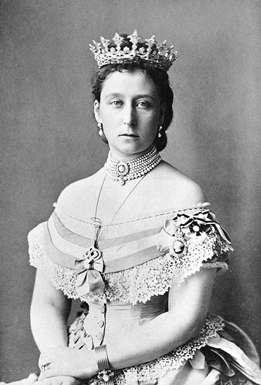
Princess Alice of the United Kingdom, born Alice Maud Mary on the 25th of April 1843. She was the third child of Queen Victoria and Prince Albert of the United Kingdom, and on the 1st of July 1862, she married Prince Louis of Hesse, in a ceremony that was frankly depressing and described as more of a funeral than a wedding by the Queen herself, as Prince Albert had died only a few months prior and the court was still in mourning. The couple went on to have seven children, some of which had a very painful ending, as you shall see. After most of the children fell ill with diphtheria, Alice nursed them all herself (she had a great interest in nursing); she was the last member of the family to fall ill, and she died on the 18th December 1878, the same day her father, Prince Albert, had died, a few years ago.
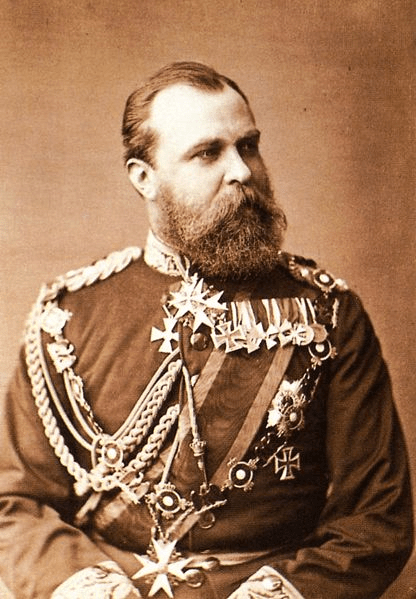
Her husband Ludwig, who became Grand Duke of Hesse and by Rhine on the 13th June 1877. He was born on the 12th September 1837 and died on the 13th March 1892, ate the age of 54, after suffering a heart attack.
Amidst their children, these are the ones who had unfortunate demises:
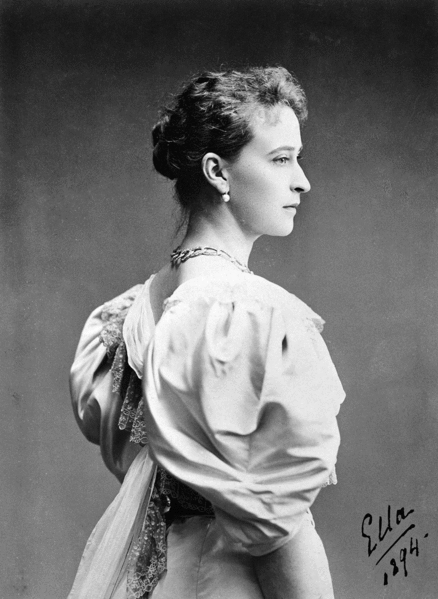
Princess Elisabeth of Hesse and by Rhine, who became, upon her marriage, Grand Duchess Elizabeth Feodorovna of Russia. She was born Elisabeth Alexandra Luise Alix; it is possible that Alexandra was to honour the Princess of Wales. Her birth occurred nearly a year after Albert Edward and Alexandra married, on the 1st November 1864; on the 15th June 1884, she married Grand Duke Sergei of Russia. Sergei was assassinated on the 18th February 1905; following the Russian revolution, Elisabeth was arrested and exiled. On the 17th July 1918, in Alapayevsk, she was executed in the sequence of the Russian Revolution. She was 53 years old.
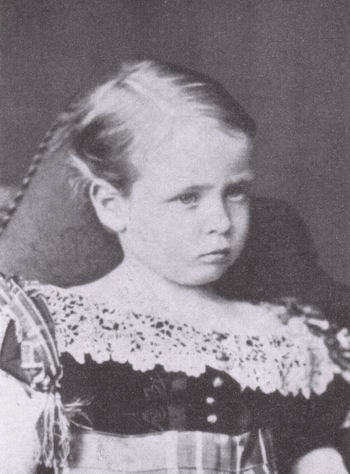
Prince Friedrich Wilhelm August Victor Leopold Ludwig. He was born on the 7th October 1870 and died aged 2, on the 29th May 1783. Friedrich was born with haemophilia, and sadly passed away after falling off a window inside his mother’s bedroom while playing with his brother. He survived the fall, but not the brain hemorrhage it caused.
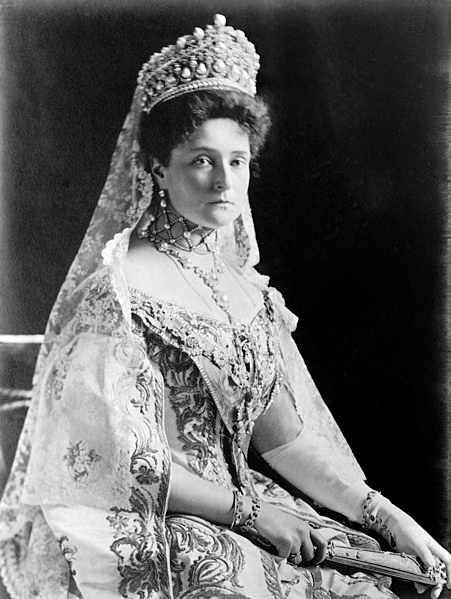
Princess Alix of Hesse, Alix Viktoria Helene Luise Beatrix, named after each of her mother’s sisters, and born on the 6th June 1872. She would grow up to become the last Tsarina of Russia, under the name of Alexandra Feodorovna. At the age of 46, on the 17th July 1918, she was executed with all her immediate family as a consequence of the Russian revolution.
In The Romanov Sisters, Helen Rappaport quotes the following:
- Alexandra Feodorovna: ‘If only you knew how fervently I have prayed for God to protect my son from our inherited curse’. This is one of the few mentions to a curse, but it is not to a Hessian curse – it is to haemophilia.
- Prince Charles of Denmark did an astral chart and concluded about Olga Nikolaevna: «it is certain … that she will never live to be thirty.»
- However, before the wedding, Alix found out that Mrs. Allen, her hostess at Prospect Place in England, had given birth to twins, and thought it was a «lucky sign». Alix did not believe she was cursed prior to her wedding to the Tsar.
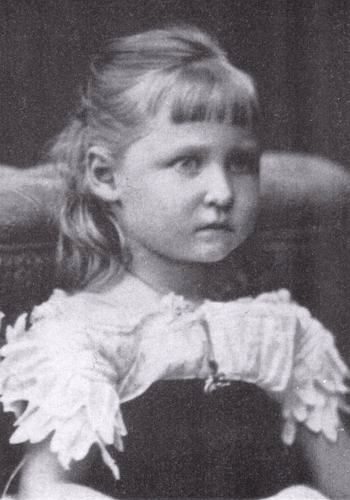
Princess Marie Viktoria Feodore Leopoldine of Hesse and by Rhine, born on the 24th May 1874. She passed away following the bout of diphtheria that overcame the Ducal family and which also killed her mother. It was the 16th of November 1878 and she was four years old.
Amidst their grandchildren, these are the ones who had unfortunate demises:
- George Louis Victor Henry Serge Mountbatten, 2nd Marquess of Milford Haven. The son of Princess Victoria and Prince Louis of Battenberg, he was born on the 6th December 1892 and died on the 8th April 1938, as he suffered of bone marrow cancer; he was 45. His son, David Mountbatten, died on the 14th April 1970, aged 50, with a heart attack.
- Prince Louis Mountbatten, born in 1900, was also a son of Princess Victoria and Prince Louis. He died at an older age, but his cause of death was an IRA bomb set on the 27th August 1979. He was 79 years old.
- Prince Waldemar Wilhelm Ludwig Friedrich Viktor Henrich of Prussia, son of Prince Heinrich of Prussia and Princess Irene. He died on the 5th May 1945, at the age of 56, due to complications related to haemophilia.
- Prince Heinrich Viktor Ludwig Friedrich, born on the 9th January 1900, passed away on the 26th February 1904, aged 4, after falling off a chair and developing a brain haemorrhage – he was a haemophiliac.
The great-grandchildren:
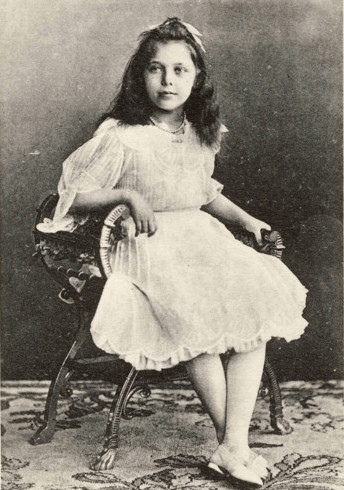
- Princess Elisabeth Marie Alice Viktoria of Hesse and by Rhine. She was born on the 11th March 1895 to the Grand Duke Ernst and his first wife, Princess Victoria Melita; at the age of 8, she contracted typhoid fever, and died on the 16th November 1903.
- Her half-brother, prince Georg Donatus, died on a plane crash in 1937, at the age of 31. On the plane with him were Princess Cecilie of Grece and Denmark (the sister of Prince Philip, Duke of Edinburgh), 26, her two eldest children, Ludwig (6) and Alexander (4), and his mother, Grand Duchess Eleonore. Cecilie had gone into labour, and the remains of the baby were also found, meaning she likely gave birth during the flight. Their daughter, Princess Johanna (Johanna Marina Eleonore), was not on the plane with them and was adopted by her uncle and aunt, but she died of meningitis at age 2.
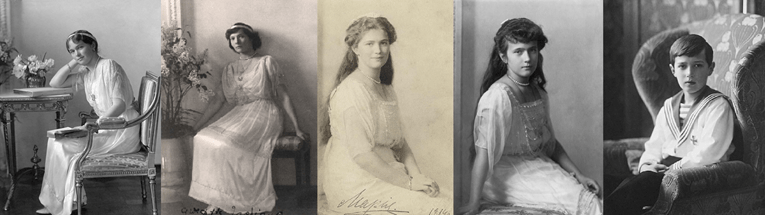
- The five children of Alexandra Feodorovna, executed in the sequence of the Russian Revolution, on the 18th July 1918: Olga Nikolaevna Romanova (22), Tatiana (21), Maria (19), Anastasia (17) and Alexei (13).
Well, yes. Looking at this, it would seem the descendants of the Hessian household are cursed. But were they? Those who married into the Romanov family were caught under the Russian Revolution, and there are many theories about how the Romanov family may have actually been saved, if the circumstances had been different; in fact, if most of the girls had not been ill by the time their father abdicated, who knows what would have happened. Either way, there are two Hesse daughters and five Hesse grandchildren amidst the Romanov, but that is hardly the entire Hessian family. Others died of diseases and illnesses, which were, unfortunately, very common and very fatal in the 19th and early 20th century, especially when young children are to be observed. Mortality levels were insanely and sadly high, especially child mortality. Then, a few cases of heart disease, but the only “curse” that seems to be transcendent and acknowledged by the Hesse is that of haemophilia, which is by no means exclusive to their household (it is believed they all inherited it from Queen Victoria, after all), and of which many more people suffered throughout the world.
Aside from that, there is also the fact that many Hesse descendants actually lived long, fulfilling lives that did not end abruptly: Alice of Battenberg, daughter of Princess Victoria, ended up marrying Princess Andrew of Greece and Denmark, having 5 children and passing away at the age of 84 at Buckingham Palace; one of her living descendants is, as mentioned, Prince Philip, Duke of Edinburgh. Victoria’s second daughter, Louise, married Gustaf VI of Sweden, becoming his queen consort and living until the age of 75; the Swedish royal family descends from her.
Lord Louis Mountbatten’s first daughter, Patricia, lived to the age of 93, and the youngest, Lady Pamela, is currently 90 years old. These are only a few examples. There are loads of Hesse descendants who did great and who are doing great, and not even all male direct descendants of Princess Alice of the United Kingdom suffered from haemophilia.
And when we look back at Ludwig the Fourth’s predecessors? Was there a “curse” before?
• His father, Prince Charles of Hesse and by Rhine, had four children, all of which lived to adulthood and had issue. He died at 67.
• Louis II of Hesse: he had five surviving children, all of which lived to adulthood, and died at 70.
• Louis I of Hesse: had six children who lived into adulthood, and died at the age of 76.
• Louis IX of Hesse-Darmstadt – had seven children who lived into adulthood, and died at age 70 in 1790.
• Louis VIII of Hesse-Darmstadt – had three children who lived into adulthood, died at the age of 77 in 1768.
• Ernst Ludwig, had seven children who lived into adulthood, died at age 71 in 1739.
• Ludwig VI – married twice and had about three-hundred children (well, sixteen). He died at 48, which is quite young by comparison, but honestly, with sixteen children, many of whom living into adulthood, can he really be considered cursed? Besides, as we move further back in History, average life expectancy diminishes.
• George II – Had 15 children, died at 56 in 1661.
• Ludwig V, had 11 children, died at 48 in 1626.
• George I, had 11 children and died at 48, in 1596.
• Philip I, Landgrave of Hesse, had at least 18 children, and died age 62, in 1567.
• Wilhelm II, Landgrave of Lower Hesse, died age 40 in 1509, had 3 children.
• Ludwig II of Hesse, died aged 33 in 1471, had at least 11 children.
• Ludwig I, had five children, died aged 55 in 1458.
• Hermann II, Landgrave of Hesse, died about 71-72 years old in 1413, after having eight children.
• Ludwig the Junker, died age 40 in 1345, after having three children.
• Otto I of Hesse, had at least 5 children and died at about the age of 56 in 1328.
• Henry I , the first Landgrave of Hesse, died in 1308 at the age of 64 and had at least 13 children.
• Henry II of Brabant (the Hesses only start with Henry I of Hesse!), died aged 40ish in 1248, had at least 8 children.
• Henry I, Duke of Brabant – died about age 70 in 1235, had at least 8 children.
• Godfrey III, count of Louvain, died about the age of 48 in 1190, had at least four children.
• Godfrey II, count of Louvain, died in 1142 at about 32 (liver disease).
• Godfrey I, count of Louvain, died at the age of 79 in 1139 (which is quite the feat), had at least six children.
• Henry II, count of Louvain, died in 1078 at about the age of 58. Had at least four children.
• Lambert II, count of Louvain.I don’t know how old he was when he died, but he had at least 3 children.
• Lambert I, Count of Louvin, died in 1015 at the age of 65, had at least 3 children.
• Reginar III, Count of Hainaut, died in 973 at the age of 53, had two children.
• Reginer II, Count of Hainaut, died at about the age of 42 in 932, had three children.
• Reginar I Longneck – no idea how old he was when he died, in 915. Had at least 4 children.
• Gilbert, Count of Maasgu, vassal of Charles the Bald. He may or may not have been Reginar I’s father.
This is as far as Wikipedia (ahem) will take me, regarding the patrilineal line of Hesse. As you see, most of the Hesse ancestors on a male line lived long lives, or at least as long as the average life expectancy, when you look at the Early Modern Era and the Medieval Times. Furthermore, most of them seem to be blessed with an extraordinary fertility. It would seem, then, that there is no curse on the House of Hesse, which brings us back to haemophilia – if that is so, the curse of the House of Hesse was never theirs at all, as it was brought from the House of Hanover and Saxe-Coburg and Gotha, through Queen Victoria and Princess Alice. Nonetheless, most of Queen Victoria’s nine children had long, fulfilling lives, and all but Princess Louise had children; most of them had grandchildren, and their descendants are thriving in the 21st century. It seems that Princess Alice’s descendants had plenty of misfortunes, but thankfully not all.
The Hessian Curse is a tempting expression to use when we look at the House of Hesse in a particular moment in History; but when we observe things in the long run, both the past and present of its members and descendants seems hardly cursed at all. The only thing that is undeniable is that Princess Alice of the United Kingdom and some members of her immediate family had very sad occurrences in their lifes, and very sad deaths.
 The Historian Chronicles


