

We all know Game of Thrones / A Song of Ice and Fire is mostly Medieval in inspiration, no one can deny it. The author took a lot of ideas from historical events such as the Wars of the Roses and the Norman conquest. That does not mean, however, that there isn’t quite a lot of Classical inspiration. From ancient symbols to figures and ideas, if you look attentively, you can find quite a lot of comparisons. The one I’m bringing today involves Cersei Lannister and Robert Baratheon.
For those of you who did not closely follow the story, I will make a quick summary. Cersei is the daughter of one of the most powerful men in this fictional world, the Lord Tywin Lannister of Casterly Rock. When the Targaryen were ruling, her father tried to arrange for her to marry the heir to the throne, Prince Rhaegar Targaryen. Rhaegar’s father, Aerys (aka The Mad King), went with something else instead, and Rhaegar was married to Princess Elia Martell of Dorne.
As several noble houses started to be contrary to the king, whose attitudes were becoming ever more erratic, a few events triggered civil war. Aerys burnt Rickard Stark alive, and was also responsible for the death of his eldest son, Brandon. Several other nobles were killed as well. Lyanna Stark, his daughter, was kidnapped – according to the official version – by Rhaegar Targaryen, which was the ultimate casus belli.
Since Lyanna was betrothed to Robert Baratheon, her disappearance caused great outrage. Together with the execution of the Stark patriarch, there were enough motivations to raise banners in rebellion. According to the show, Lyanna actually went with Rhaegar voluntarily, but whether the books reflect that or not, it matters little to our story. Robert won the war and the throne, but Lyanna died in childbirth.
Robert did not get Lyanna back, but he was now king of the Seven Kingdoms, and had the need to cement their safety. His marriage to Cersei Lannister would be a warrant of the safety of the realm. Cersei was young, from a very important and wealthy family, and quite beautiful- according to her uncle, a “rising sun”; but for some reason or the other, Cersei never did captivate Robert, who practically came to hate her. Still stuck to his love for Lyanna – and I’m not going to question Robert’s love here – and clearly unwilling to care for or respect Cersei, Robert did nothing to make their marriage less of a penance. And neither did Cersei, who grew more and more bitter as time went by, and relied mostly on her secret liaison with her twin brother, Jaime, for the sake of her… sanity, perhaps.
Unfortunate and unhappy marriages were not uncommon in a time when people had to forcefully marry a person they had often never met, usually for dynastic or economic reasons. This is a practice that comes as no novelty in the Middle Ages, but becomes ever more prominent as a system of blood-based aristocracy comes to rise. The urge to preserve noble blood and the importance of past names would lead to many Cerseis and Roberts in our actual historical past. If one looks even further back, however, one will find the idea of arranged and unhappy marriages is not introduced during the Middle Ages. The Greek and Roman worlds alike also had political marriages, although divorce was definitely far easier. And the notion had some reflection on their mythologies.
There are two notorious (but by no means exclusive) cases in Greco Roman myths that one can compare to Cersei and Robert. They involve some of the main deities in the Pantheon, and are well-known through film and television. The first is that of Zeus/Jupiter and Hera/Juno, whereas the second would be Aphrodite/Venus and Hephaestus/Vulcanus.
Let’s go one at a time.
Zeus and Hera:
Their story did not begin in happy manners. After Zeus had won the war against the Titans and became ruler of Mount Olympus, he took a fancy to she who would be his future wife, but Hera was not having any of it, and so Zeus had to resort to magical stratagems to compromise her and essentially force her to marry him (there are many nuances to this story, but bear with me). Their marriage was one of the Hierogamies, the Sacred Weddings in Greek Myth, and in theory would represent the conjugal home, the domestic space, etc. This would have been easier if Zeus had not decided to fall in love with half of Greece (both with men and women alike, something which is often not mentioned), and started having children with mortal women. A jealous Hera would become aware of the existence of many such children, and she would try to make their life miserable – if they died, all the better for her. The most famous case of her infamous revenge is Herakles, the Roman Hercules, who was not at all a happy lad while Hera was tormenting him.
Cersei and Robert have a similar situation. Robert, too, seeks the company of other women, most often ordinary women from amidst the common folk, and he has plenty of children out of wedlock. At a certain point, Cersei, too, will take up her revenge, and order that all such children are killed. Only one famously escapes, namely Gendry, a man who becomes a very good rower. Cersei acts like a jealous Hera, taking revenge against the bastard children of her husband. In her case, it was not merely out of spite, but also to preserve her children’s claim to the throne.
Hera and Cersei have other obvious connections. The most obvious one is that they are both Queens – THE Queen, in both cases. Hera often appears connected to lions, which are, coincidentally, the symbol of House Lannister, to which Cersei belongs. Curiously enough, Hera marries her brother, whereas Cersei has an extraconjugal affair with hers – a corruption of the myth?
Aphrodite and Hephaestus
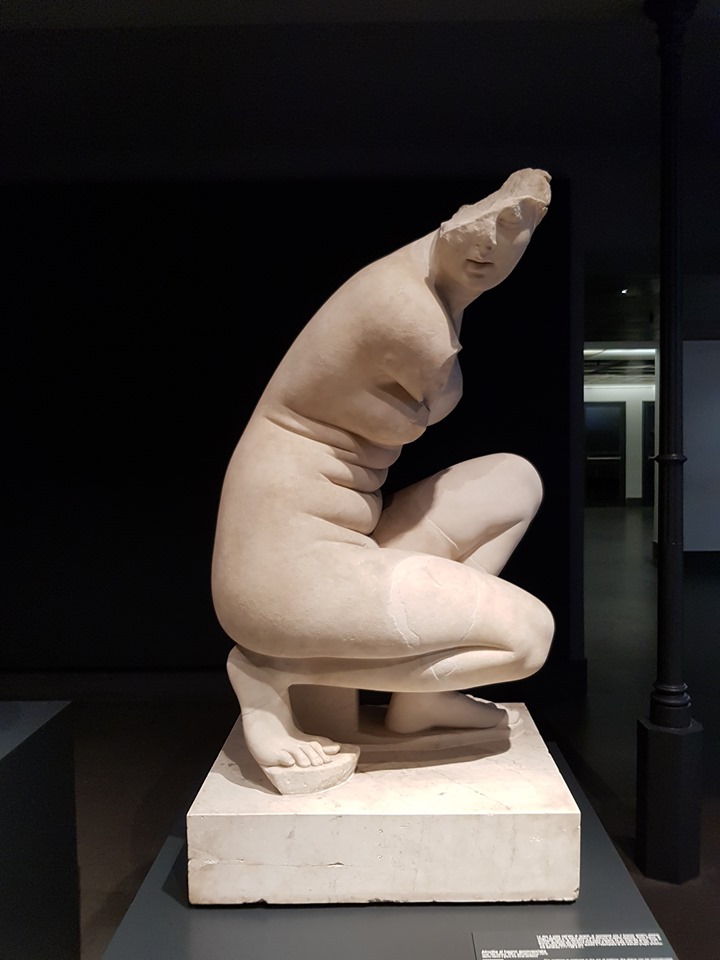
This one has equally strong similarities. Aphrodite, the most beautiful of the goddesses, was made to marry Hephaestuss, the ugliest of all gods. As she had no love for him, she cheated on him with plenty of other deities and mortal men, the most well-known of them being Ares, the god of war.
Robert Baratheon is described as very handsome in his youth, although his looks are lost as time goes by. However, he is indirectly connected to forges. Hephaestus is symbolically represented by the hammer, in his case a blacksmith’s hammer; Robert Baratheon’s favoured weapon was, top, the hammer. An even more evident connection is seen through his bastard son, Gendry, who is, in fact, a blacksmith, just like Hephaestus. Robert is indirectly connected to Hephaestus through this imagery of forging, hammers and blacksmiths, but there is more. Like Hephaestus, he is married to a woman who does not love him.
Aphrodite will have many children, but none of those children will be her husband’s. The same happens in Cersei’s case. Three children she will have, and all by her twin brother Jaime. Both Aphrodite and Cersei are very keen on their own beauty: in Aphrodite’s case, there is that famous beauty contest where she offered Paris Alexander the most beautiful woman in the world, Helen of Sparta. In Cersei’s case, the obsession is partly motivated by a prophecy that states she will be replaced by a younger and more beautiful queen, which leads to constant comparison in which she certifies herself that she is still the most beautiful .
Although both betray their husbands, Aphrodite surely has a lot more extra conjugal affairs than Cersei, who, aside from a few exceptions, usually reserved her affection for her brother. It is hard to say whether Jaime Lannister would represent one of Aphrodite’s many affairs, as he could be many of them. He is the Knight of the King’s Guard and one of the most fighters in the realm; he shares that “God of War” side with Ares, although he could partly be an Adonis, the most handsome man. In truth, I don’t think I can make a very specific connection between Jaime and a Greek Myth character this very moment, and I will reserve it for another time, as I prefer to focus in Cersei.
Greek Religion is non-dogmatic, but the Greeks and Romans already frequently associated her with golden hair and pale skin. This association goes on through time, and it reappears with full strength during the Early Modern period, when Aphrodite is often depicted with fair-haired, often with a reddish tint (see the Birth of Venus by Boticceli, for instance). Fair hair and pale skin are also attributes of Cersei Lannister. Of course, this is also the typical medieval beauty, as such characteristics were very prized. However, this can also be yet another connection between Aphrodite and Cersei.
Interestingly enough, Aphrodite’s main assigned bird is the dove, and the dove also appears associated to Cersei, albeit not directly. Little Dove is the nickname she gives to Sansa Stark (and Sansa, as many people have already noted, is the name of a variety of apple, a fruit also associated to Aphrodite). Sansa tries to copy Cersei many times, and even when she turns against her, Cersei will still have a lot of influence on her; by extension, Sansa is a younger Aphrodite, another goddess of love and beauty; but she is also a Psyche.
The legend says that Psyche was such a beautiful princess, that people begin to worship her instead of Aphrodite. She sends her son, Eros (Roman Cupid), to avenge herself; this backfires, although one way or another, Eros falls in love with Psyche himself. This bears a certain similarity in Cersei’s relations with her two prospective daughters-in-law, Sansa and Margaery, although she is surely more lenient towards the former than the latter. She is jealous of their youth and beauty, and of the impact they have on her sons.
There is also an interesting and reversed (twisted, even) connection. Aphrodite falls in love with the mortal Adonis, as I said, and he is killed by a boar… which is the ultimate cause of death of Robert Baratheon. So here is an inversion of the traditional myth, where the husband, and not the lover, was killed by a boar.
There are, of course, several differences, too. The most evident is, to me, the fact that Cersei has no obvious connection to the sea, whereas Aphrodite, in many versions, is born of sea foam. Another one is the existence of a twin, which is absent in the myths surrounding Aphrodite. But they are both supportive of their mortal children (see Aphrodite and Aeneas), and will partake in war if necessary; they both go to their father for complaints, too. In the Illiad, Aphrodite is presented as the child of Zeus and Dione, and she goes to him to grumble about being injured in war. Cersei grumbles to her father all the time.
There’s a lot that can be said and analysed about Cersei, whether we are talking of the show or the books. She is one of the most developed characters by George R R Martin, and even though the last two books aren’t out yet, she is certainly meant for an unfortunate fate – sometimes, for her and many other characters in this universe, it seems that they almost never stood a chance, and that determinism is at hand, however much there is a whole discussion about self-fulfilling prophecies. Aye, they could have chosen not to listen to them, but in a world where magic is proven real, a world where dragons come alive and where there are dark shadows killing people in the night, it is very difficult not to become fearful of prophecy, although they are slippery sands. Cersei is like Hera and Aphrodite alike, doomed for unhappiness in her marriage, growing into jealousy and resentment. Two powerful goddesses with attributes merged into one queen.
 The Historian Chronicles
I love this!! Keep going with the great work!!! 🙂
LikeLike
Thank you my friend!
LikeLike