We have just arrived, at this moment, in Buckingham Palace, and the first free moment that I have must be dedicated to you. I assure you that I cannot imagine it at all yet that you have left, that we have separated and the emptiness that you leave is painfully felt by all. The Queen, the Duchess of Kent, Prince Albert expressed really sincere regrets, I believe, not to see you here; we were expected; but we have said, that you felt so tired, that you could not risk yourself, and I even told the Queen, that I had not spoken to you any longer, as it was so painful for me to leave you!
The queen is the simplest woman that one can imagine, one is struck from the first sight; she has something of goodness, of softness, of discretion, that is very attractive. Forgive me, dear and beloved Mama, if I write you a letter which is a little disjointed, but I am tired of the crossing which was bad and we were all more or less sick, even Papa. We were tossed around for 9 hours. At Dover, we were received by the garrison, a chamberlain of the Queen. At the railway station Prince Albert received us. The Count and Countess of Lavradio are doing well, she was named maid of honour by Pedro, but she is staying here for now. Farewell, dear and adored Mother, I am, naturally, continually thinking of you, looking forward impatiently to hearing from you. Papa and Leopold both are fine but sad not to see you here, as I am too; but still, hopefully what happened is for the better. I kiss your hands tenderly. – Your faithful daughter.
COMMENT:
Stephanie has finally left Prussia. Therefore, this letter must have been written sometime after the 29th of April 1858, following her marriage by proxy at St. Hedwig’s Cathedral in Berlin. Princess Victoria of Prussia (Vicky) was present at the ceremony, and made several sketches of the affair, which you can see, for instance, in the link below. Stephanie arrived in Buckingham Palace on the 6th May, after having set sail towards Dover (this took the whole of 9 hours, it seems) and then travelled by train to London; her eldest brother and father accompanied her, but her mother, unfortunately, had to stay behind for health reasons.
I’ve spoken of Lavradio in a previous letter, but a quick recap: him and the countess were diplomats, and they had met Stephanie at her home about one-two months before this encounter. I assume the Duchess of Kent is referring to Victoria’s mother, Princess Victoria of Saxe-Coburg-Saalfeld, who was the sister of Ernst I of Saxe-Coburg and Gotha and Prince Ferdinand of Saxe-Coburg and Gotha; Ernst I is, in turn, the father of Prince Albert, and Ferdinand is the father of King Ferdinand of Portugal (Pedro’s father; confusing, but I hope this makes sense).
Queen Victoria seems to have made a very favourable impression on young (now) Queen Stephanie of Portugal. She seems to consider her a discreet, pleasant woman, far different from the frolicking and flirty Victoria who, in her own memoirs, had champagne and danced at balls in her youth. Victoria was now thirty-nine years of age, and already a mother of nine children (Princess Beatrice, the youngest child, had been born in 1857, and was therefore two when Stephanie visited). Stephanie’s deep bond with her mother is only just beginning to be seen – all her correspondence posted here, from now on, will be directed to the mother she left behind, and whom she will long for seeing again.
Image from the original newspaper’s digital version, which you can find linked below.
During my History roamings, I usually go and dig into period sources, which are the best method to actually get first-hand insight about historical periods. Biased they may often be, but they are one of the main objects of study, and often times it happens that I stumble upon very amusing excerpts. One of the most profitable places to find them is newspapers. Gossip tabloids aren’t exactly a new thing – people in the past also wanted to know what “celebrities” were up to. In the 19th century, these pieces of gossip can actually get a bit snarky. A few days ago, I stumbled upon several editions of the World of Fashion and Continental Feuilletons, and I’m bringing you today some of the funniest bits.
Page 3: (Italics as in the original text)
LOVE AND MUSIC. – A most amusing occurrence in high life is just now the subject of much pleasant conversation. An adventurer, possessing a favourable exterior and “polished manners” (these adventures are always handsome and polished) and who represented himself to be a Polish emigrant, recently obtained an engagement, to teach music in a family not a hundred miles from B—– square. Monsieur was a most persevering master of his art; his attentions to his pupil (a graceful girl of nineteen) were most devoted, indeed, it was thought that his visits were more frequent than it was necessary that they should be for the instruction of the young lady. At length, this modest professor of the guitar, declared his passion for his charming pupil in a letter, which the young lady with that good sense which does not always prevail in similar situations, placed before her family, and of course, Monsieur received an immediate dismissal. On the following day, however, while the ladies were out in their carriage, the guitarist called at the house and requested permission to fetch from the drawing-room, some music books which he had left there. This was granted, and when the family returned the found the following sentence written on a piece of paper, in pencil, “C’est ainsi qu’en partant je vous fais mes adieux.”. A valuable gold watch is missing!
(French text: This is how, upon leaving, I bid you my farewell)
Page 4:
A RETURN. – Young Lord —-, whose puppyism is remarkable, recently made a declaration to one of the prettiest stars of fashion, Miss A— R—. We do not undertake to say what the terms of the letter were which young scapegrace sent to the lady, but judging from his characteristic arrogance and vanity, we imagine it was a bold one. However, the offer was rejected, and a day or two afterwards, some waggish friend sent to the poor young Lord, in the lady’s name, a very handsome foolscap and bells, which we hope his Lordship may long enjoy!
Page 4:
A CURIOUS FACT. – Lady E —-, who is never so well as when she is ill (a paradox which her physician could explain in a moment) is always free from complaint at Christmas! During the holidays she can exist without a prescription! This is a curious fact. A re there not many like poor Lady E—-, who make maladies for themselves, and to whom the idea of pleasure is of more efficacy than all the physic in the apothecary’s shop? Now, here is Lady E—-, who is continually pouring down her throat unpleasant draughts, and who gulps down more bolusses in one year than Lord E—- uses shot, is always welcome at Christmas, because she likes merry-making, and she knows that Lord E—- is such an affectionate hubby, that he would not have the voice of mirth heard in his establishment, if he thought her ladyship in ill health.
Page 4
D’O —- Y’S BEAVER. – We understood that D’O—-Y’s hat is the subject of much grave disputation in the boudoir of Lady B—–N. Her Ladyship, with her characteristic good taste, objects to her friend and relation wearing anything so ugly. D’O—-Y, on the other hand, contends that his beaver is a beauty, and manfully declares that he would rather part with his whiskers than part with his peculiar hat! D’—-Y is, however, in the wrong; and as he is noted for being a gallant man, we submit to him the propriety of acquiescing in the views of Lady B—-N. He should allow her Ladyship to give his hatter an order for him.
Page 51 (I particularly like this one, it is very unusual and sounds like a proper love story x’D)
4. – THE PATRICIAN AND THE PLEBEIAN
Another “distressing case!” Hearts will be hearts! And Love often links strange ones together. The nephew of a Marquis, and a menial! What a disparity! The young gentleman who has thought proper to commit this freak, is the eldest son of Admiral the Hon. Sir —-! He has actually married one of his father’s servants! The young gentleman is an admirer of levelling opinions, no doubt. The painful effects of this thoughtless act, are increased by the bridegroom having several unmarried sisters, moving in a distinguished circle, to whom this connection, besides being repugnant, may possibly be disadvantageous also! How shocking it would be if the young ladies were to imitate the example of their brother, and take a journey to Gretna, with butler, footman and groom!
Comment: A clear example of class division in the 19th century, and how hard it was to move between them. Not only does the newspaper criticise it heavily, but it also acknowledges that this young man’s choice would have been detrimental to his sisters’ position in society, and their likelihood of marrying well. Whether it caused a family dissent, they do not tell us. The newspaper talks of Gretna: Gretna Green was a place in Scotland where runaway couples usually went to get married, as marriage laws were different and more permissive. You can see this in Pride & Prejudice: although it did not come to pass, the characters believe that Lydia Bennet may have run away to Gretna Green, so she could marry Mr. Wickham.
Page 52 (a very British humour)
A HUME-OROUS PUN. – A member of one of the Clubs has expressed his regret that Sir JOHN GIBBONS had resorted to legal measures against MR. HUME, instead of posting him, in the usual gentlemanly fashion. “For if he had done that,” said the Club wit, “he would have enjoyed what no living man can be said to have enjoyed, a Post-hume-ous reputation (posthumous).
Pages 52-53
REMARKS AT COURT. – It was remarked at the Drawing Room, that a certain fair Countess, who has turned away heads in her time by her loveliness, and whose attachment to the gaming-table has for some time been a subject of general regret, appeared in a dress that had been sported at Court twice before, at least. The ingenious arrangement of ornaments and trimming, did not prevent the old dress from being recognised; and her ladyship, though she may have fancied that she came off with flying colours, was certainly detected, and we have reason to believe that her ladyship will be made aware of the notice that was taken of her error.
Comment: This type of snide remarks makes one understand the pressure that Royal women and other members of nobility faced when presenting themselves in society. This woman is criticised for appearing in Court three times with the same dress – as if two was not bad enough. In the 19th century (much as today), people often tried to reuse their old clothes and give them a new life, and this lady seems to have attempted to make it pass for new through new decoration. However, the sharp eyes of others seem to have noticed it, and she was thus publicly embarrassed in the local paper.
Page 72
AN OBSTINATE YOUNG LADY. – A very amusing circumstance as lately occurred at Marseilles. A young lady brought an action against the Sieur L— for unhandsome behaviour on his part. The day of judgement approached, the Court was crowded – and a very fair proportion consisted of that sex justly immortalised by Milton as “Heaven’s last best work.” The usual questions were proposed to the pretty plaintiff by the President. “Quel âge avez vous?” “Dix neuf ans, Monsieur.” “You mistake, Mademoiselle,” interrupted her counsellor, “you are of age.” The lady, however, persisted that she was a minor, and in spite of the earnest appeals of her avocat, still adhered “dix-neuf ans.” Nothing could induce the fascinating descendant of Eve to pass the rubicon of nineteen years; and there being no proof before the Court to the contrary, the complaint against the Sieur L—- was dismissed, and the “young lady” in her teens condemned to pay the costs. Registerial report has since then proven that the beautiful maid had attained the discreet age of 25.
Page 72
AN UNGALLANT COURTIER. – Lord D—-, who prides himself upon what he terms his habit of plain speaking, which, by the way, often becomes sheer impertinence, one day addressing the amiable and accomplished Miss —-, exclaimed, “My dear girl, how very red your hair is!” “Possibly, my lord,” was the lady’s quick reply; “but your lordship is the first man who ever thought of telling me so!”
Page 77
A CURIOUS QUERY. – What does Colonel H—– do every morning, at eight precisely, in the neighbourhood of —- Square, and alone? Does the gallant officer think an early ramble good for his health. Is the atmosphere lighter – the air purer in the comparatively confined neighbourhood of —– Square to what it is in his own open neighbourhood? Or can it be that he is studying the pleasing art of telegraphing with his fingers, and taking lessons occasionally from a two pair of stairs window, where the pretty —–. But we will not injure the gallant Colonel’s prospect. We know him for an honourable man, and we wish him success in all his undertakings, Vive l’amour, viva la guerre.
Comment: The ever-vigilant 19th century society. A young man going to a square every window to have a moment of communicating alone with a woman he was courting, as he probably wasn’t allowed to have much privacy with her during social situations. The newspaper, however, isn’t really helping is case, is it? This is a time of blurry morals, in which the theory demands for what we common see as Victorian morality, but the practice shows something very different, namely that these people were humans, just like us.
Sire You can judge my joy when in the evening of Easter Sunday I was announced the person who was carrying your letter, this good letter for which I beg you to receive all my very tender thanks; I cannot tell you how much ot touched me and how much the confidence it expresses in me makes me happy. I can not help but tell you, although the thought of the separation of my beloved parents, the paternal roof, my family is very painful to me, I am happy to see the approach of the moment when it will no longer be through letters that we will talk together and that I will tell you how grateful I am to God who has allowed me to dedicate my life to you;
Oh! yes Sire, I always recognise more of my happiness. What is more beautiful, sweeter in this world than the union of two hearts that understand each other, that love each other, that are animated by the same desire; it seems to me that whatever the events of life, they must be easier to bear; but I believe that what is most essential for a union to become ever more intimate, so that it is never disturbed by the lightest cloud, is for one not to let oneself be stopped at anything and always say the truth, no matter how hard it might be, because there are so many things which are easy to change in the beginning through a single word, which, when you just leave them be, grow like anything, because there is never a stop, and they can become a cause of annoyance or trouble; and also it is a very ardent prayer that I will address to you, to always tell me the truth because I am used to it and it is extremely necessary to me, which you will see, Sire, and that will be a great tranquility to me, if I dare count on it.
I find you very severe in your manner of judging yourself, but it is better like so than the opposite. It is, I believe, a great happiness when we recognise, like you, all that has influenced the development of the character as well what has been less favorable from the rest; because the more we know ourselves and the more we have realised all these impressions, the more one ought to arrive quickly and surely towards the goal that one has and I often believe that to acknowledge the less favourable matters later than sooner, at the moment, is not favourable or even good for us, and that the former can serve us in what follows;it is God’s reward for those who genuinely seek Good, who want the Good that makes everything turn for the best; when you have this desire for Good I believe that nothing is lost in life. And, if I dare say, it is the blessing of your beloved Mother that God recalled so early, who is with you and who will always be with you and will bring you happiness.
I think a lot about your beloved Mother, Sire, who left us an example of great virtues, which I will always have in front of my eyes and which I will try to follow, and I hope that she will bless our union, as if we still had the happiness of having that blessing on Earth. Here is this great day which will bind us eternally to each other, which is very close, and I have a very ardent wish to express to you, which you will understand will you not? This is because we meet the day before our wedding day in Holy Communion; it will make me very happy, I firmly believe that it will bring us happiness! My dear parents entrust me with reminding them fondly of your fond memories, and I beg you, Sire, to express my very tender compliments to your dear sister. Many times I have read and reread your good letter and always with emotion, and it is by thanking you again that I say of myself with all my heart. Your all devoted and happy fiancée – Stéphanie
Comment:
This letter does not bring many news, aside from Stephanie and Pedro’s impending wedding. It does, however, illustrate the growing emotional attachment she is forming towards Pedro. She now feels comfortable enough to gently admonish him and worry about him, seen in her advice to be careful with overworking, and to be less harsh on himself. Pedro has clearly been sharing his thoughts and feelings with her, as he has told her what he believes contributed, both positively and negatively, towards his own character (which only comes to show his personality, as a man who is his own greatest judge). Stephanie clearly keeps writing to his family and receiving letters from them, including the letters from his sister (again we do not know which one, but I would bet on the eldest, Infanta Maria Ana).
An interesting detail is her mention of his mother, Queen Maria II of Portugal. Maria II became Queen of Portugal at the age of 7, when her father abdicated in her favour to keep the Crown of Brazil to himself. She was to marry her uncle once she reached a marriageable age, and they would be co-monarchs. However, her uncle Miguel had Absolutist views (more 18th century-ish), whereas her father, Pedro, was a Constitutional monarch. That brought friction, and Miguel usurped the Portuguese crown with absolute rights as king, broke up the engagement and started a Civil War which would last quite a few years in the late 1820s.
For several reasons aside from his daughter’s honour, Pedro abdicated of the Imperial Crown of Brazil, leaving it to his only son, also named Pedro; and he went to fight for Maria’s cause. This fight happened with English help, as England, a Constitutional Monarchy, sided with Portugal (the oldest alliance still in vigour is, in fact, the Anglo-Portuguese alliance). Maria herself travelled to Europe and was in England, where she met Queen Victoria; they became friends and there are quite a few letters that survived which show their constant friendship (and misunderstandings) through the years, and Victoria also had painters sent to Portugal to create portraits and miniatures of the Portuguese Royal Family (forget not, Victoria was a big fan of Pedro, whom she thought was far better prepared to reign than her own Bertie).
Virtues, Maria may have had. But she was also known to be a stubborn woman, who was not as absent from political intervention as her role as Constitutional Monarch might make one believe. She was, however, a doting mother, even if demanding, and raised quite a few children who were generally well-liked in Europe, including Pedro. Unfortunately, she passed away in 1853, when her son and heir was about 15, giving birth to her last child, a son, who also died not long afterwards. Pedro thus became King of Portugal at a very young age, and lost his mother as a teenager during his formative years. This must have left a severe impact upon a child who was already serious and a bit melancholic by nature, and Stephanie, surely knowing these events, seems to be willing to bring back the memory of Pedro’s lost mother. Her sensitivity and sensibility to these matters probably led her to realise what was a hard subject for Pedro, one which he probably simultaneously wished and did not wish to talk about.
Odin’s been promising this post for a while, and I’ve finally come around to write it. I’ve been working on the final version of my PhD thesis, and it has finally been handed over, Odin be merciful, so now I can finally obsess about all the typos it has and focus on different things. May Jules Caesar forgive this treason, but everyone who’s been following this journey of blogging probably knows that I’m a very keen Jane Austen adept, and that her books have been my constant companions since, at least, the first moment I set my hand on Pride & Prejudice, over thirteen years ago. She can often become a bit lost in the midst of all the other 19th century authors, who write heavy books with deep moral reflections, or compelling tragedies, or brick-sized novels that I love to read and carry in my heart at all times.
But that’s undervaluing all that Jane Austen really brought. I find it extraordinary that she, without using narrative devices that result on heavy writing, without engaging in the usual dense and extensive 19th century descriptive style, without even writing books longer than two or three-hundred pages, managed to tell such compelling, heartfelt stories, that are not at all devoid of meaning and still feel compelling to read, 200 years after her death. Listen, it is a lot harder for a writer to make a point come across with scarce words and little description, and to genuinely stick to the story and tell it, without any further embellishment than the plot itself; and that is what Jane beautifully does, constructing simple but realistic plots (even though no one poops and there are no poor people in her stories). She is telling the story of a specific world within the world, pass the redundancy: the world of the 19th century bourgeoisie, those who were wealthy enough to live pleasant, comfortable, even lazy lives, but who were not mingling in the restless, reckless and often far less morally balanced world of high nobility.
Jane Austen lived in several places throughout her unfortunately not too long life, and one of those places was Bath, United Kingdom. The name itself is very suggestive: Bath, where you can find the old Roman Baths and the former temple of Sulis Minerva, a place which became particularly fashionable for its healing properties after Her Majesty the Queen Anne went there to deal with her health problems. I visited Bath twice, and hope to visit again. It is a lovely city, very pleasant to look at, with those light yellowish tiles used in construction, surrounding by pleasant English countryside, with Roman archaeological sites and a Patisserie Valerie. To make it even better, it is really close to Stonehenge, which is always an impactful visit. Bath has all the qualities that I appreciate in a city, and I came back quite delighted, especially as I’d just gone to a Jane Austen-related event, of which Bath has plenty year-round. I even visited the Jane Austen Centre, and got some pretty cool souvenirs.
But my opinion on Bath is one, and Jane’s is another. Much has been said about her feelings regarding Bath, and they’re not often pointed as the most pleasant. She incorporated the cities into her stories, and what I bring you today is a light, short analysis of the way Bath is presented in them. Out of the main six books that reached us (not counting Lady Susan / letters / short stories), the two that speak of Bath more intensely are Persuasion (my personal favourite) and Northanger Abbey; both have storylines occurring in Bath, and the city life will have its influence upon both Anne Elliot and Catherine Morland.
I’m going to start with the latter, and leave my favourite to the end. In Northanger Abbey, bath appears for the first time related to the Allen family, a couple who become rather fond of Catherine Morland and invite her to visit with them. Mr. Allen, a landowner of «the property about Fullerton, the village in Wiltshire where the Morlands lived», unfortunately had a «gouty constitution», and therefore was packed up to Bath, to see if the waters could improve his situation. Fun story, if you go to the Roman Baths, you can actually taste the waters. Fun story, don’t. Kidding. It’s a really amusing experience, and I do it every time I visit. That doesn’t mean it’s tasty. Be warned and drink at your own peril.
So Mrs. Allen takes Catherine to Bath, because «if adventures will not befall a young lady in her own village, she must seek them abroad. Catherine is described as a young, sweet, cheerful girl, «without conceit or affectation of any kind», rather on the shy side, with a pleasant figure, pretty «when in good looks», and overall «uniformed» (auch), seventeen years old and still rather unaware of the ways of the world, as she had lived a shielded, happy existence at her parents’ home, with her many siblings. Leaving to Bath with plenty of maternal recommendation, she starts the first six weeks of youthful enjoyment in her life, it seems, and she is very pleased with the idea: «all eager delight», looking all over the city, and very excited to stay at the hotel in Pulteney Street. Jane Austen says that she is «about to be launched into all the difficulties and dangers of a six weeks’ residence in Bath». First red flag.
This Miss Morland, while off and about Bath, meets the hero, of course, Mr. Tilney, and he is the one who gives a list of the chief entertainments of the city: «the Upper Rooms, the theatre, and the concert», as well as the “Lower Rooms”. Catherine had been there a week, and had visited all three, and was pleased with all. Mr. Tilney, however much Bath entertained him, was not as excited – as an older and more travelled men, Bath probably didn’t exercise the same attraction. He underlines the particular matters of existence in Bath, the civilities, the many small details of daily life which, he playfully says, could fill up a journal: the «civilities and compliments of every day to be related as they ought to be», the «particular state of [her] complexion, and curl of your hair to be described in all their diversities». Bath seems very interesting to Tilney, so interesting that the most you can do is to tell your cousins about how fashionable you are in every given occasion.
Mrs. Allen, on the other hand, is not as displeased by the city as Tilney, and finds great entertainment in it: shopping. «There are so many good shops here. We are sadly off in the country; not that we have very good shops in Salisbury, but it is so far to go». Tilney is evidently amused by the muslin and linen conversation, and enjoys Bath so very much that he is never in the pump-room when he ought to be (namely when Catherine is there): «every creature in Bath, except himself, was to be seen in the room at different periods of the fashionable hours; crowds of people were every moment passing in and out, up on the steps and down; people whom nobody cared about, and nobody wanted to see; and only he was absent.» Mr. Tilney doesn’t seem to be the biggest fan of Bath’s social life.
Miss Thorpe, the antagonist, is more in-sync with Catherine and Mrs. Allen. She was twenty-one, as she is said to be four years older than Catherine, and therefore compared «the balls of Bath with those of Tunbridge, its fashions with the fashions of London»; Thorpe can also «rectify the opinions of her new friend in many articles of tasteful attire», discover flirtations, «point out a quiz through the thickness of a crowd». They quickly become friends, although they could not possibly be more different between themselves, and if Mrs. Allen is associated with the frivolous side (shopping), Thorpe is the gossip, and Catherine is the only one appreciating the city for its novelty and the pleasantness of meeting a new site.
Jane Austen’s snide remarks, which are always highly amusing and entertainment, start to appear in chapter 5: «for a fine Sunday in Bath empties every house of its inhabitants, and all the world appears on such an occasion to walk about and tell their acquaintance what a charming day it is». The word BATH is mentioned in this novel at least 83 times, and it is constantly in the mind of the heroine, but often in association with the famous Tilney: he was an elusive creature and difficult to find, «nowhere to be met with», neither «in morning lounges or evening assemblies; neither at the Upper nor Lower Rooms, at dressed or undressed balls», «nor among the walkers, the horsemen, or the curricle-drivers of the morning»; «his name was not in the pump-room», either. These geographic notions continue to appear later in chapter 7, far more elaborate than before: «Everybody acquainted with Bath may remember the difficulties of crossing Cheap Street at this point; it is indeed a street of so impertinent a nature, so unfortunately connected with the great London and Oxford roads, and the principal inn of the city, that a day never passes in which parties of ladies, however important their business, whether in quest of pastry, millinery, or even (as in the present case) of young men, are not detained on one side or other by carriages, horsemen, or carts.» The busy life of Bath, the movement, the city hub-hub, are something that Austen doesn’t seem to greatly appreciate, and she voices that displeasure again in the voice of Henry Tilney, who, while dancing with Catherine, asks her whether she still likes Bath as much as she had when she arrived (Bath. Bath. Bath, Bath, Bath, Bath).
«Bath, compared with London, has little variety, and so everybody finds out every year. For six weeks, I allow Bath is pleasant enough; but beyond that, it is the most tiresome place in the world. You would be told so by people of all descriptions, who come regularly every winter, lengthen their six weeks into ten or twelve, and go away at last because they can afford to stay no longer.»
Half of Catherine and Henry’s early romance is basically them having friendly, amusing conversations about whether Bath is pleasant or not! Notice the genius of Austen: she creates one motive, one which we keep forgetting, because so many events pass in between; but when we look at the book as a whole, it keeps reappearing right in front of us, the book-long jest about whether Bath is pleasant or not. I shall cut this here and call this part one, as this is growing long. I will finish with a phrase of Henry Tilney, which I believe draws close to Austen’s heart and probably explains a great deal of why she disliked it: when Catherine states that Bath life and country life are rather similar, he says:
«But then you spend your time so much more rationally in the country.»
It was a privation for me not to write to you for so long, but it was only a few days ago that we came back from a trip that my dear parents made so that I would see different relatives and good friends again and that I take my leave from them, before the time when I have to go to my new homeland, which is dear to me already, I beg you to believe it, because it is yours, because you love it and you are called to live for it; and during that time I hardly had a moment for myself, because in a trip like this there are so many people and things that you want and that you have to see again.
It was on my way back that I received the letter of February 18 which you were kind enough to write to me; it was for me one of the most pleasant moments during all this time, because your letters make me so happy, it is then that I find an answer to the feelings which now occupy mainly my heart; Whenever I hear from you I feel closer to you, you can then judge my joy when I received your good letter of 27.
I thank you with all my heart, because it made me very happy. But I once again urge you to never let yourself stop writing, when and as you like, by the reserve or by the fear of fatiguing me, that is an impossible thing! Although I am still far from you, I already live and feel for you, it is therefore the sweet duty that Providence imposed on me and for which I always give thanks, and my happiness consists in sharing your feelings, your joys and your woes; but for that you must tell me about it and, if you do not do it now, you will cause me a great privation.
Which is the life that is without difficulties, without pain? The more we learn to live, the more we notice that they are basically the daily woe and that true joys are only light rays that are sent to us from time to time so that we do not lose heart, to elevate our spirit, to aid us regain new strength in the struggle for life. I have, of course, still very few experiences, but I have the feeling that it must be so in life and that the more we advance in it, the greater the struggles become, but the strength also increases and the experiences , often unpleasant, that we had to go through, help you by enlightening you. It is the story of the life of each human, no matter how small the circle in which he moves, how much more it must be so in an elevated position, where the duties are greater, more extensive! But then, God who is just also gives more strength and light and, when we trust Him, we arrive at Good while recognising our own helplessness.
I also believe that there can be the vice of work, like the vice of idleness, although it is much less common than the latter; it has its danger too, because it is not always for having worked enormously that one arrives at once to the best result; I believe that you must also have free time to reflect on your work, in order to collect the best fruits; and then it is a duty not to push the virtue of work, which is also a source of true happiness, to an excess which, after a certain time, renders one incapable of exercising it.
Ah! Sire, it seems to me that you are quite right in saying that the court is the friction of height and baseness; this is why, when one lives there and especially when one has to be at the head of it, one must try to look at it from a very elevated point of view so as not to be able to be affected by its intrigue and his pettiness and to have next to a sanctuary that his troubles cannot reach.
That is the family; it is the sanctuary, where you must always be able to retire to rest from business, to forget the noise of the world, to enjoy these joys so sweet that family life alone can give you, may God grant for that His Holy Blessing, may these family bonds be devoted entirely to Him, so that He may preserve them, so that they become ever closer and sweeter, because as happy, as close as they are, they are human and for that imperfect and fragile, without His help, without His grace.
I still have one thing in my heart, that I must tell you, although in any relationship other than ours it might perhaps almost seem like an affectation, something that between us cannot exist; this is that by seeing the way much too benevolent, much too flattering in which you think of me, I cannot help the fear of not being able to answer in reality to what you expect from me, and I beg of you heartily not to believe it, as this is the truth: that I would have in the accomplishment of my mission only my love for you and my good will, all the rest will depend on the grace of God.
It was very good of you, to have kindly taken into account my desire to get to know a little of the political press of my new country and to have sent me for this purpose the most significant newspapers; receive all my thanks!
My dear parents warmly commend themselves to your fond memories, Sire; the good letter you wrote to my beloved Maman touched her well and made her happy. Allow me to recommend to your benevolence my brothers and my young sister who are good and full of tenderness for me and who are now transferring some of the feelings they have for me to you, Sire.
I dare ask you to respectfully remind me of the memory of the King your Father and to present my tender tributes to Her Excellency the Dowager Empress.
Comments:
This letter, written sometime in late February or early March 1858, sees Stephanie preparing further and further for her new role as Queen of Portugal. Her parents take her on a tour to bid her goodbyes to friends and family, one which, she says, was so busy, that she unfortunately barely had the time to write to King Pedro. And yet, Stephanie is using growingly affectionate terms towards her future husband.
She tries – and this is a constant in other letters – to give him incentive to write to her, as she seems to enjoy receiving his letters very much. Pedro’s reasons for avoiding to write might not be only caused by modesty, but also by his own character: Stephanie gently admonishes him against overworking, reminding him that working too much is just as useless as working too little, as one will not be productive enough or do the work properly.
She also says, for the first time in one of her letters, that she loves him – although they have never seen each other. Much as one could say that she is attempting to grant the King’s favour, from the overall tone of her letters and the reports that reach our days (from people such as Queen Victoria), Stephanie does seem a very affectionate person, and her relationship with Pedro will reflect that, as we will see in later letters to her mother. Her approach to life seems very stoical – life is meant for suffering, and every once in a while, something pleasant happens to give people strength to carry on. This is a bit in the line of her husband’s approach to his life and his work. They are beginning to understand they share moral values: the Court is corrupted and frivolous, something they both disapprove.
But as Pedro is the head of the Country and the Court, he must endure it, and take refuge in family – his sanctuary – when he can. Stephanie makes a soft attempt at reminding him that people are humans, even his family, and that much as the relationships might often be strained, it is on family that he can always truly rely upon.
A very interesting detail is how Stephanie asks him to send her the main political papers, so she may begin to learn the political climate of the country; equally interesting is that Pedro agrees, thus showing he considered Stephanie a peer, and was opening her the doors to her new Consort statues as having some sort of political knowledge.
Pedro did not expect Stephanie to exclusively be a fashionable, entertaining queen, and Stephanie, sweet as she might seem, was surely no fool, and wanted to be informed and know what she was getting herself into. She’d already begun learning the Portuguese language, as she says in a previous letter.
The two families now seem to be actively writing to each other. Earlier in the year, Stephanie got a letter from one of Pedro’s sisters; now, he is writing to her Mother, and she is recommending her siblings to him.
They seem to be keen on becoming true “partners in crime”, so to say: true partners as King and Queen, supporting each other in their difficult task of ruling a country affected by decades of civil war and instability. For that, it would be essential to have a supporting family structure and, even more important, to have honesty between them – as Stephanie says, “there can be no affectation”.
When I posted the translation of letters 3 and 4 of Princess Stephanie to her fiancé the King of Portugal (you can find them on my Instagram!), I discussed the fact that Stephanie was discussing the Yellow Fever epidemics which afflicted the city of Lisbon in the year of 1857. Throughout the 50s and the 60s, Lisbon endured lots of these, particularly yellow fever and cholera. It is, therefore, very natural for Stephanie to have become aware of this in her letters, and for her and King Pedro to exchange words on the subject; equally interesting is the fact that there is a report available, which tells us a little more about what happened.
Yellow fever, an illness which is spread by mosquito bites, receives its name from the fact that it can cause liver damage – and, therefore, yellow skin. On the 29th September 1857, the government deemed it necessary to create an extraordinary health council to solve the epidemics – “to occur to the demands of the sanitary service [words from original text] which the circumstances claimed”; and this council performed the “very honourable, and not scarcely difficult commission” which was entrusted to it, as well as taking measures to see if it was possible to prevent a second wave, at least in such a vast scale.
King Pedro, Stephanie’s fiancé, received this committee at least in two occasions: on the 29th December 1857, and on the 7th January 1858. Stephanie’s letters from prior to the January meeting seem to indicate the epidemics had improved by this time. By the end of it, a report was made in which the council attempted to explain the «origins, means of propagation, nature, march and termination» of the illness, the results of the measures taken; and it ends by stating, in an eerie tone that seems to show the great difficulties and suffering:
«May God permit that Portugal never again has the occasion of feeling the renewal of scenes of so much grief and mourning.»
First part of the Report
In the first moment of the Report, the committee begins by speaking of the characteristics within Portuguese territory, which may make it more or less prone to disease. They state that the climate makes Portugal one of the healthiest countries in Europe, and that a great deal of disease epidemics may be avoided, or at least diminished, if the Portuguese were more careful in «agriculture, management of river courses, cleaning inhabited areas, and observing the rules of good hygiene». Auch. I promise we’re very clean nowadays.
Nevertheless, regardless of these unfortunate characteristics (namely, lack of care), Portugal seems to have been particularly blessed in terms of maladies, according to the committee. The report proceeds by explaining the major maladies and how they affected the country:
Cholera: the world suffered from Cholera, and Portugal with it, but unlike the rest of the world, it only had two major widespread episodes, twenty years apart.
Typhus: brought to Portugal by wars, enemy invasions, army settlements, and war-related calamities. The 19th century was a period of unrest. First, through the Napoleonic Wars: Portugal was invaded three times, by Soult, Junot and Massena, and people saw the royal family flee to Brazil last-minute (Portugal had sided with England in the conflict). Then, in the 1820s and into the 1830s, there was a civil war between King Pedro’s grandfather (Pedro IV of Portugal) and his great-uncle (Miguel I); then, several civil unrests during the reign of his mother, Maria II.
The bubonic plague: it affected Portugal just as much as the rest of Europe, especially during the 16th century; the 17th century saw a single major case in 1679. It then seems to disappear and not reappear for nearly two centuries.
Yellow fever: there were cases in 1723 (when it first reaches Europe, according to the report); it also affected Europe in 1731 (Cadiz, Gibraltar, Seville, Malaga, Barcelona, Leorne, and overall meridional regions). In 1845 and 1846, it affected Cape Verde, which was part of the Portuguese territories in this period – it is not unlikely that it was brought to the continent through there, seeing as Lisbon was a major harbour. In the 17th century, it affected Pernambuco, Brazil (1686), but did not reach Portugal.
Lisbon and O’Porto seem to have enjoyed a particular immunity (their word), regarding the american typhus, but it could «not be explained by hygienic care, which has been little scrupulous in all of time» (AUCH).
The 1850s epidemics
In the year of 1849, the epidemics became more widespread in Brazilian harbours. From that moment on, it started to reach Portugal’s European territory (and I say it this way because it had several colonies throughout the world, as did most countries in Europe). At first, it was not particularly violent; however, in the Autumn of 1857 (the year Stephanie and Pedro get engaged), a widespread epidemic phenomenon occurs. Quoting directly from the source, «the shape of the epidemics became pestilent, violent, long-lasting, and it will remain in history as one of the very notable ones of the same nature which developed in Europe».
The committee considers than in terms of overall mortality, this epidemics was not as violent as the one in 1723 – there were fewer people and the city was smaller, and at that time, 6000 individuals passed away, whereas in 1857, with a larger city and more individuals, it did not reach those numbers, nor the numbers of Spanish Andaluzia.
They relate this episode to the cases which appeared in several places in Lisbon in 1856 (Belém, Rua da Bica, Rua Larga de S. Roque), as well as in O’Porto in 1850, 1851 and 1851.
The episode was predated by the epidemics of cholera-morbus – at a certain point, this one coexisted with YelloW Fever in Lisbon.
In O’Porto
1850 – The tradeship Duarte IV came from Brazil into the River Douro; 5 Customs Guards fell ill and three died. It was believed to be yellow fever, but it was quickly solved, unexpected, and, according to the committee, there was an interest to hide it or disguise it.
1851 – The medical-surgical school of O’Porto showed that temperatures raised to 32º C during the Autumn, and that there was scarce rain between Summer and Autumn. The temperatures oscilated between 29,3′ and 30,16; the winds came from the east and north, and seldom from the south. The right margin of the river, within the city of O’Porto, has poor conditions of salubrity, resulting from its proximity of the river and the great conjunction of homes and individuals (affected neighbourhoods: Miragaia and Massarelos). However, this is found in most cities, and O’Porto can be considered one of the healthiest.
1851 still – in August, the galley Tentadora arrived from Rio de Janeiro. Five dead individuals were on board during the travel, but it was received and admitted after a 9-day quarantine. The first cases which appeared were amidst Customs Guards who went inside this ship while on duty. The government greatly disapproved of the irregularities of the admission of this ship. Quarantine for ships in O’Porto was considered a disappointment, and O’Porto had no “lazareto” (a kind of quarantine house or hospital).
10th September 1851 – ship Duarte IV enters O’Porto, after a 56 day-long journey from Rio de Janeiro (the same ship which brought the sick individuals in 1850). Several people died on board during the journey. There was a 12 day quarantine, but it was admitted afterwards. Two Customs Guards got sick – they had stayed on board during the quarantine – and died, one after 3 days, the other after 5 days. Three more guards got sick – they had been on board while the ship unloaded. One of them had a severe illness.
Right afterwards. more individuals went sick, all of them having been in contact with these ships, objects which they carried, or individuals which had travelled within them. The illness arrived the said neighbourhoods with scarce salubrity, Miragaia and Massarelos.
The natural characteristics of the illness (of which I’ll underline the yellow skin hue) made everyone quickly aware it was yellow fever. Up to the 8th Setember, there was a record of 17 suspected dead – Custom and Tobacco guards, tradesmen, an English innkeeper and his wife, and five more women, one of whom the wife of Tentadora‘s captain. She passed away after 5 days.
Another ship arriving from Brazil, Santa Cruz, led to similar incidents.
As you see, the first major pole of the disease came through tradeships arrived from Brazil, and it entered firstly through harbours, infecting those in charge of Customs, sailors, ship captains and their families, but also the innkeeper and his wife, who probably had contact with one of the people infected.
We’ll go on through this journey through next post.
In the past few years, there have been a few places out in the interwebz talking about something called the Curse of Hesse. I tried to dig into it and find out where this idea began, even going as far as to try to understand whether there were 19th or early 20th century references to it. So far, up to the moment of the publication of this post, I found none – please let me know if you do!
I do not believe in curses. However, looking back in History, I can understand how these myths of curses upon certain people or certain houses can arise. This talk of the “Hessian Curse”, wherever it came from, is understandable, considering the ways in which some of its members died; and yet, History cannot be interpreted retroactively, that is, no one could have known, at the beginning of the 19th century, that many descendants of the Hesse Ducal Household would have met tragical demises. It is highly unlikely that the members of the Ducal House of Hesse would have thought themselves cursed in any way prior to any of such events. Furthermore, as said above, it has been very difficult for me to find any evidence of when this idea of the Hessian “curse” was born, which makes me inclined to believe that it is more recent than any of us might think. It’s a bit like the death of Caesar: it’s easy for us to say the oracle was right about the Ides of March, after it actually happened. But how many prophecies had the oracle failed before?
Either way, the House of Hesse is fascinating, especially in the last few decades of the 19th century. It has many well-known members and descendants, some of which through Queen Victoria, and I’m going to show you the members which, I believe, led many people nowadays to believe in the Hessian Curse:
Princess Alice of the United Kingdom, born Alice Maud Mary on the 25th of April 1843. She was the third child of Queen Victoria and Prince Albert of the United Kingdom, and on the 1st of July 1862, she married Prince Louis of Hesse, in a ceremony that was frankly depressing and described as more of a funeral than a wedding by the Queen herself, as Prince Albert had died only a few months prior and the court was still in mourning. The couple went on to have seven children, some of which had a very painful ending, as you shall see. After most of the children fell ill with diphtheria, Alice nursed them all herself (she had a great interest in nursing); she was the last member of the family to fall ill, and she died on the 18th December 1878, the same day her father, Prince Albert, had died, a few years ago.
Her husband Ludwig, who became Grand Duke of Hesse and by Rhine on the 13th June 1877. He was born on the 12th September 1837 and died on the 13th March 1892, ate the age of 54, after suffering a heart attack.
Amidst their children, these are the ones who had unfortunate demises:
Princess Elisabeth of Hesse and by Rhine, who became, upon her marriage, Grand Duchess Elizabeth Feodorovna of Russia. She was born Elisabeth Alexandra Luise Alix; it is possible that Alexandra was to honour the Princess of Wales. Her birth occurred nearly a year after Albert Edward and Alexandra married, on the 1st November 1864; on the 15th June 1884, she married Grand Duke Sergei of Russia. Sergei was assassinated on the 18th February 1905; following the Russian revolution, Elisabeth was arrested and exiled. On the 17th July 1918, in Alapayevsk, she was executed in the sequence of the Russian Revolution. She was 53 years old.
Prince Friedrich Wilhelm August Victor Leopold Ludwig. He was born on the 7th October 1870 and died aged 2, on the 29th May 1783. Friedrich was born with haemophilia, and sadly passed away after falling off a window inside his mother’s bedroom while playing with his brother. He survived the fall, but not the brain hemorrhage it caused.
Princess Alix of Hesse, Alix Viktoria Helene Luise Beatrix, named after each of her mother’s sisters, and born on the 6th June 1872. She would grow up to become the last Tsarina of Russia, under the name of Alexandra Feodorovna. At the age of 46, on the 17th July 1918, she was executed with all her immediate family as a consequence of the Russian revolution.
In The Romanov Sisters, Helen Rappaport quotes the following:
Alexandra Feodorovna: ‘If only you knew how fervently I have prayed for God to protect my son from our inherited curse’. This is one of the few mentions to a curse, but it is not to a Hessian curse – it is to haemophilia.
Prince Charles of Denmark did an astral chart and concluded about Olga Nikolaevna: «it is certain … that she will never live to be thirty.»
However, before the wedding, Alix found out that Mrs. Allen, her hostess at Prospect Place in England, had given birth to twins, and thought it was a «lucky sign». Alix did not believe she was cursed prior to her wedding to the Tsar.
Princess Marie Viktoria Feodore Leopoldine of Hesse and by Rhine, born on the 24th May 1874. She passed away following the bout of diphtheria that overcame the Ducal family and which also killed her mother. It was the 16th of November 1878 and she was four years old.
Amidst their grandchildren, these are the ones who had unfortunate demises:
George Louis Victor Henry Serge Mountbatten, 2nd Marquess of Milford Haven. The son of Princess Victoria and Prince Louis of Battenberg, he was born on the 6th December 1892 and died on the 8th April 1938, as he suffered of bone marrow cancer; he was 45. His son, David Mountbatten, died on the 14th April 1970, aged 50, with a heart attack.
Prince Louis Mountbatten, born in 1900, was also a son of Princess Victoria and Prince Louis. He died at an older age, but his cause of death was an IRA bomb set on the 27th August 1979. He was 79 years old.
Prince Waldemar Wilhelm Ludwig Friedrich Viktor Henrich of Prussia, son of Prince Heinrich of Prussia and Princess Irene. He died on the 5th May 1945, at the age of 56, due to complications related to haemophilia.
Prince Heinrich Viktor Ludwig Friedrich, born on the 9th January 1900, passed away on the 26th February 1904, aged 4, after falling off a chair and developing a brain haemorrhage – he was a haemophiliac.
Princess Elisabeth Marie Alice Viktoria of Hesse and by Rhine. She was born on the 11th March 1895 to the Grand Duke Ernst and his first wife, Princess Victoria Melita; at the age of 8, she contracted typhoid fever, and died on the 16th November 1903.
Her half-brother, prince Georg Donatus, died on a plane crash in 1937, at the age of 31. On the plane with him were Princess Cecilie of Grece and Denmark (the sister of Prince Philip, Duke of Edinburgh), 26, her two eldest children, Ludwig (6) and Alexander (4), and his mother, Grand Duchess Eleonore. Cecilie had gone into labour, and the remains of the baby were also found, meaning she likely gave birth during the flight. Their daughter, Princess Johanna (Johanna Marina Eleonore), was not on the plane with them and was adopted by her uncle and aunt, but she died of meningitis at age 2.
The five Romanov children. All images from Wikimedia Commons.
The five children of Alexandra Feodorovna, executed in the sequence of the Russian Revolution, on the 18th July 1918: Olga Nikolaevna Romanova (22), Tatiana (21), Maria (19), Anastasia (17) and Alexei (13).
Well, yes. Looking at this, it would seem the descendants of the Hessian household are cursed. But were they? Those who married into the Romanov family were caught under the Russian Revolution, and there are many theories about how the Romanov family may have actually been saved, if the circumstances had been different; in fact, if most of the girls had not been ill by the time their father abdicated, who knows what would have happened. Either way, there are two Hesse daughters and five Hesse grandchildren amidst the Romanov, but that is hardly the entire Hessian family. Others died of diseases and illnesses, which were, unfortunately, very common and very fatal in the 19th and early 20th century, especially when young children are to be observed. Mortality levels were insanely and sadly high, especially child mortality. Then, a few cases of heart disease, but the only “curse” that seems to be transcendent and acknowledged by the Hesse is that of haemophilia, which is by no means exclusive to their household (it is believed they all inherited it from Queen Victoria, after all), and of which many more people suffered throughout the world.
Aside from that, there is also the fact that many Hesse descendants actually lived long, fulfilling lives that did not end abruptly: Alice of Battenberg, daughter of Princess Victoria, ended up marrying Princess Andrew of Greece and Denmark, having 5 children and passing away at the age of 84 at Buckingham Palace; one of her living descendants is, as mentioned, Prince Philip, Duke of Edinburgh. Victoria’s second daughter, Louise, married Gustaf VI of Sweden, becoming his queen consort and living until the age of 75; the Swedish royal family descends from her. Lord Louis Mountbatten’s first daughter, Patricia, lived to the age of 93, and the youngest, Lady Pamela, is currently 90 years old. These are only a few examples. There are loads of Hesse descendants who did great and who are doing great, and not even all male direct descendants of Princess Alice of the United Kingdom suffered from haemophilia.
And when we look back at Ludwig the Fourth’s predecessors? Was there a “curse” before?
• His father, Prince Charles of Hesse and by Rhine, had four children, all of which lived to adulthood and had issue. He died at 67. • Louis II of Hesse: he had five surviving children, all of which lived to adulthood, and died at 70. • Louis I of Hesse: had six children who lived into adulthood, and died at the age of 76. • Louis IX of Hesse-Darmstadt – had seven children who lived into adulthood, and died at age 70 in 1790. • Louis VIII of Hesse-Darmstadt – had three children who lived into adulthood, died at the age of 77 in 1768. • Ernst Ludwig, had seven children who lived into adulthood, died at age 71 in 1739. • Ludwig VI – married twice and had about three-hundred children (well, sixteen). He died at 48, which is quite young by comparison, but honestly, with sixteen children, many of whom living into adulthood, can he really be considered cursed? Besides, as we move further back in History, average life expectancy diminishes. • George II – Had 15 children, died at 56 in 1661. • Ludwig V, had 11 children, died at 48 in 1626. • George I, had 11 children and died at 48, in 1596. • Philip I, Landgrave of Hesse, had at least 18 children, and died age 62, in 1567. • Wilhelm II, Landgrave of Lower Hesse, died age 40 in 1509, had 3 children. • Ludwig II of Hesse, died aged 33 in 1471, had at least 11 children. • Ludwig I, had five children, died aged 55 in 1458. • Hermann II, Landgrave of Hesse, died about 71-72 years old in 1413, after having eight children. • Ludwig the Junker, died age 40 in 1345, after having three children. • Otto I of Hesse, had at least 5 children and died at about the age of 56 in 1328. • Henry I , the first Landgrave of Hesse, died in 1308 at the age of 64 and had at least 13 children. • Henry II of Brabant (the Hesses only start with Henry I of Hesse!), died aged 40ish in 1248, had at least 8 children. • Henry I, Duke of Brabant – died about age 70 in 1235, had at least 8 children. • Godfrey III, count of Louvain, died about the age of 48 in 1190, had at least four children. • Godfrey II, count of Louvain, died in 1142 at about 32 (liver disease). • Godfrey I, count of Louvain, died at the age of 79 in 1139 (which is quite the feat), had at least six children. • Henry II, count of Louvain, died in 1078 at about the age of 58. Had at least four children. • Lambert II, count of Louvain.I don’t know how old he was when he died, but he had at least 3 children. • Lambert I, Count of Louvin, died in 1015 at the age of 65, had at least 3 children. • Reginar III, Count of Hainaut, died in 973 at the age of 53, had two children. • Reginer II, Count of Hainaut, died at about the age of 42 in 932, had three children. • Reginar I Longneck – no idea how old he was when he died, in 915. Had at least 4 children. • Gilbert, Count of Maasgu, vassal of Charles the Bald. He may or may not have been Reginar I’s father.
This is as far as Wikipedia (ahem) will take me, regarding the patrilineal line of Hesse. As you see, most of the Hesse ancestors on a male line lived long lives, or at least as long as the average life expectancy, when you look at the Early Modern Era and the Medieval Times. Furthermore, most of them seem to be blessed with an extraordinary fertility. It would seem, then, that there is no curse on the House of Hesse, which brings us back to haemophilia – if that is so, the curse of the House of Hesse was never theirs at all, as it was brought from the House of Hanover and Saxe-Coburg and Gotha, through Queen Victoria and Princess Alice. Nonetheless, most of Queen Victoria’s nine children had long, fulfilling lives, and all but Princess Louise had children; most of them had grandchildren, and their descendants are thriving in the 21st century. It seems that Princess Alice’s descendants had plenty of misfortunes, but thankfully not all.
The Hessian Curse is a tempting expression to use when we look at the House of Hesse in a particular moment in History; but when we observe things in the long run, both the past and present of its members and descendants seems hardly cursed at all. The only thing that is undeniable is that Princess Alice of the United Kingdom and some members of her immediate family had very sad occurrences in their lifes, and very sad deaths.
In the last post about Greek Sculpture, we talked about a huge number of things. The one thing we did not talk about was the actual replies to the questions Odin received! Alas, the Chronicler has digressed amidst other subjects and got lost in the depths of Grecian Art and ancient myths… But we’re here now, and more than ready to finally pose a reply to your questions.
First one: Where were the Greeks able to source the marble for statues? Quarries were developed a bit all over the Mediterranean world, to explore different types of materials. Marble quarries were one amidst many others. Some of them are actually still in work, with marble being extracted for modern buildings and art pieces! In fact, marble has been exploited since long before the Greeks started using it for statues – at least since the Neolithic period. In the Greek World, it was found a bit all throughout Greece and Turkey, with many of them being born of local needs (if you need materials, you create a place for extraction). Some of the most well-known types of marble used in Ancient Greece are:
Pentelic Marble (from Mount Pentelicus)
Parian Marble (from the island of Paros)
Syracuse
Naxos
Delos
Mount Hymettus
Epirus
Styra More frequent in Roman chronologies:
Proconnesian Marble (Island of Marmara)
Aphrodisian Marble (Göktepe)
Thasian marble
Some of the many locations where you could find Greek quarries.
Looking at the map above, you can see some (although by no means all) of the locations from which marble was extracted. The stone has different characteristics, varying amidst white, grey and pinkish hues. As I said, marble had been worked long before the Greeks: according to Getty Musem’s catalogue on Ancient Marbles, the first big boost happened in the Cycladic islands during the third millennium BCE; then, the big place for marble works will become Crete (Knossos). As time went by, it then extended to other large centres, such as «Myceneae, Pylos, and Athens», all this happening long before Classical and Hellenistic Greece came to life.
What would they do with it if they messed up and had to start over?
Now, the pieces where the marble was worked were an entirely different thing. However, the two most-coveted were, most likely, the first two: Pentelic Marble and Parian Marble. John Boardman, once again, gives some help in this regard: he explains that the Greeks started working marble a lot more than limestone (which is softer and easier to work with) around the 5th century BCE, and they started developing the techniques necessary to work harder stones. As one might imagine, it took quite a few years to become a noteworthy artisan, and the names of many of the apprentices have never reached us. When you reach a certain level of expertise, you will not be as prone to making mistakes as you were in your youth, when you spend your years in practice; then, the method in use was one to make it as error-proof as possible: the Ancient Greeks would draw the general shape of the statue on all sides of the marble, and they would sculpture a bit from each side and rotate. However, we are all humans, and humans are fallible, so we all make a mess, even when we’re very good at something. Proof is, there are several examples of unfinished statues. In the late 19th century, E. A. Gardner spoke of several of these unfinished sculptures which were housed in the National Museum of Athens; more mentions of unfinished statues are found in Sources below. There were many reasons why an ancient sculptor might abandon a work: perhaps, as Gardner suggested, he decided that the proportions would turn out all wrong; perhaps the person who ordered the statue decided it would not be convenient to actually pay for it; perhaps the city was hastily abandoned due to war (an example shown by Kenneth Lapatin, namely the statue of Zeus for the Megarian Olympieion). The thing about working such a hard material as marble is that if you make a mistake, it will be difficult to correct. If it was a smaller mistake, the creator might have been able to disguise it, although it is unlikely that the patron would have purchased an imperfect statue. The most likely thing is that mistakes led to the abandonment of the sculpture altogether. What they did to these abandoned sculptures, we do not know for sure; the fact is that many of them reached our days untouched, which means that at least a portion of them wouldn’t have been destroyed. They were purely and simply abandoned, which might sound sad, but if they hadn’t been, we wouldn’t have invaluable clues on the actual sculpting method and the stages of creating an Ancient Greek marble sculpture.
Mr. Sad Unfinished Marble Face. Very disappointed. Taken from Mr. Gardner’s article, this is believed to have been a potential statue of Hermes.
Sources for quarries and ancient marble exploration: The Metropolitan Museum of Art, New York: Greece and Rome, edited by John P. O’Neill, 1987. Henry Washington, “The Identification of the Marbles Used in Greek Sculpture”, American Journal of Archaeology, vol. 12, no. 1-2, 1898. Encyclopedia of Ancient Greece, edited by Nigel Wilson, 2006. Routledge. The Oxford Encyclopedia of Ancient Greece and Rome, Volume 1. 2010. Several authors, Marble: Art Historical and Scientific Perspectives on Ancient Sculpture, J. Paul Getty Museum.
Classical Marble: Geochemistry, Technology, Trade, edited by Norman Herz, Springer.
Johann Joachim Winckelmann, The History of Ancient Art, Volume 1, 1856
Ben Russel, 2013, The Economics of the Roman Stone Trade, Oxford University Press
K. Laskaridis, 2004. “Greek marble through the ages: an overview of geology and the today stone sector”, Dimension Stone 2004. New Perspectives for a Traditional Building Material, A. A. Balkema.
Donato Attanasio, Matthias Bruno, Walter Prochaska and Alì Bahadir Yavuz, “APHRODISIAN MARBLE FROM THE GÖKTEPE QUARRIES: THE LITTLE BARBARIANS, ROMAN COPIES FROM THE ATTALID DEDICATION IN ATHENS.” Papers of the British School at Rome 80 (2012): 65-87.
A few sources for Greek Sculpture: Mr. Richard Neer again and Mr.
J. D. Beazley and Bernard Ashmole: Greek Sculpture and Painting to the end of the Hellenistic Period, 1966. Cambridge University Press.
Handbook of Greek Sculpture, edited by Olga Palagia.
Sheila Adam: The Technique of Greek Sculpture in the Archaic and Classical Periods, 1966, The British School at Athens. Supplementary Volumes No. 3, The Technique of Greek Sculpture in the Archaic and Classical Periods
J. Paul Getty Museum, several papers: Art Historical and Scientific Perspectives on Ancient Sculpture
E. A. Gardner, “The Processes of Greek Sculpture, as Shown by Some Unfinished Statues in Athens”, 1890, The Journal of Hellenic Studies.
H. J. Etienne, 1968, The Chisel in Greek Sculpture: A study of the way in which material, technique and tools determine the design of the sculpture of Ancient Greece, Brill.
Kenneth Lapatin, 2001, Chryselephantine Statuary in the Ancient Mediterranean World, Oxford University Press.
His Majesty the Odin and The Chronicler have once more teamed up to bring answers to your questions. This time, we’re getting into the immensely cool and often elusive world of Ancient Art, namely, Greek sculpture. Two questions were posed to us, and to those questions we will try to reply, to the best of our capacities. However, before we start replying to these questions, there’s an important matter that Odin specifically asked me to talk about. This is something that has been generally divulged in the past few years, but as it is a relatively recent discovery and it hasn’t reached everyone just yet, Odin felt it was important for it to be shared, first and foremost.
Did you know that Ancient Greek Sculptures were painted?
That’s right. Whiteish marbles are a Renaissance and Neoclassical trend. Greek and Roman marble statues were usually painted, and some of them were actually found with some traces of that age-old paint; for most of them, however, the paint ended up being washed off and gave the false illusion of the pale marbles we are so familiar with. There are a few reliable articles where you can find some samples and even samples of what they must have originally looked like:
This is called polychromy. Painted statues have actually been going on for centuries, and you can see plenty, for instance, in Dutch and Portuguese Medieval and Early Modern sculptures, particularly wooden sculptures. Of course, when you look at the colourful images, they may not seem as elegant as the pale marbles we’re used to. Why did they paint them? Well, statues are objects of worship, first and foremost. In the Ancient World, there is plenty that can be said about a statue. If anything, because, in their myths, statues may come alive. You only need to look at the myth of Pygmalion and Galatea. The Greek Gods (and Roman, and Egyptian, and most Gods in the Ancient world, for that matter) are ever-traveling entities that can show up at any place, at any time: legend has it that when Mithridates besieged Rhodes during the First Mithridatic War, a vision of Isis would have launched fire against his sambucas (a war machine).
Deborah Steiner has a very interesting chapter name in her book about Ancient Greek statues (see Sources below): she calls it Replacing the Absent. That is, first and foremost, the role of a statue: she goes on to explain that, at first, they represented and replaced the dead, especially in cases of absent corpses, so that the spirit can rest. They can also be created as offerings and ways to thank or appease divinity. First and foremost when we’re speaking of Ancient Gods, they’re eidolons, figures to be object of reverence, to be used in rituals and processions if need be. Greek sculptures are attempting to represent a subject, and therefore, when they present a subject such as divinity, they will present it in colour, as the Gods are made to be a perfected physical image, to represent a certain «attribute» or «value» (Zaidman and Pantel): the Greek Gods are made to look as humans, not because they believed they were exactly like so, but because they were trying to represent physical perfection». And if they’re trying to emulate an expression of absolute physical beauty, they represent it in an anthropomorphic, human-like figure which, as all human figures, has some colour – coloured eyes, coloured hair, coloured skin. Even in literature, the Greek Gods are not marble-like figures moving along: most goddesses and god-like women are envisioned as fair-haired, as it was the beauty ideal en vogue at the time.
In this regard, Steiner quotes Socrates: painting is «a representation of things seen», and colours are part of that representation; art must not copy, but perfect and beautify. One of the most well-known Greek statues, for instance, goes as far as to use noble materials – the chryselephantine (made in marble and ivory) statue of Goddess Athena, which once stood in the Parthenon and disappeared without much of a trace (see Boardman, 1985), and was decorated with details in actual gold.
While an actor was performing a play, he was believed to incarnate the spirit of god Dionysus. In the same way, a statue could incarnate the spirit of a God. As say Zaidman and Pantel, «The special characteristic of all religious representation is to endow the divinity being figured with a presence without obscuring the fact that it’s not actually there». Statues are an expression of the divine, for which, as the same Zaidman and Pantel said, the Greeks had different words; but, all in all, it is all a bit of the same. These statues could be dressed and bathed, or just rest within the temples (still Zaidman and Pantel); what they were not, was a type of Michelangelo.
Therefore, and going back to Boardman:
«Hair, eyes, lips and dress were certainly painted on Classical marbles, and we are only less sure about whether or how often flesh parts might also have been tinted (sunburned men and gods, pale women and goddesses)»; weaponry may have also been painted.
«We too readily project into Classical antiquity expectations about marble sculpture which have been formed by the practices of Renaissance and Neo-Classical artists, who saw Greek sculpture in polished Roman versions, stripped by time of any paint or accoutrements which might sully the pristine, breathing white.»
There is also the case of the acrolithic, a mixture of wood and marble sculptures, where the flesh (hands, feet and head) would be attached to a wooden body.
Other materials applied to statues would be «glass or stone», «ruddy copper or silver».
I’ve mostly focused on statues of Gods and demi-gods, which are a significant part of Greek Sculpture, but there were also other types of representations, such as the young men representing athletes (the kouros, singular). Greek sculpture is by no means uniform – there are regional variations, as diverse as the several city-states, and there is an evolution from the most archaic periods until the Hellenistic. Art is not motionless and it keeps developing. But the point is, during the Classical period, and without trying to make a treaty on the symbolism of Greek Sculpture (that would be an endless knot!), most statues were painted, and this happened not only for aesthetical reasons, but also for the purpose of better representing an incarnation of whatever the artist was trying to represent.
Many Greek statues weren’t really marble.
Although the Ancient Greeks did work their statues in marble, the main material for most works is bronze. What we see nowadays, in many cases, are copies of bronze originals which have been destroyed later on, as bronze is a valuable metal which might be a lot more useful to practical people in the shape of, say, a few coins. Thankfully for us, we can have some idea of the original because of the many artists who copied these bronzes and sculpted them into stone. The Romans are responsible for many of these copies. We were also fortunate enough to get some bronze originals, although these exist in a far smaller number than their marble counterparts
When did these bronze statues begin being melted? Well, whenever it was necessary. In William Smith’s Dictionary of Greek and Roman Antiquities, he gives us some idea: firstly, during the reigns of Constantine and Theodosius, a time in which Christianity began to settle as the main religion of the Roman Empire and which led to the destruction of figures of the formerly worshiped pagan gods. However, Smith goes on to say that these early years of Christianity in the Roman Empire were by no means the main responsible by the destruction of these works of art, but that the «circumstances and calamities of the times» were the major issue, and that melting bronze statues occurred in «times of need». He poses the main moment of destruction in the 13th century siege of Constantinople, and that this was partly due to the need of collecting bronze. Many of these statues must have been taken to Constantinople upon the fall of the Western Roman Empire, and there they remained until the Crusades came. As said by Dawkins:
«When the capital of the roman world was transferred from Rome to Byzantium, the emperors decorated the new capital with treasures of art from all the cities of Greece, and these remained in their places, naturally with certain losses, due for the most part to fires and earthquakes, but without any very serious diminution, until the warriors of the Fourth Crusade, diverted from the Holy Land, came to Constantinople, took the still virgin city, sacked it, and shattered or melted down almost all the priceless works of antiquity.»
There is also another detail, which can be interpreted, according to Anthony Cutler:
«More certainly he [Niketas] knew older historians’ reports of the Vandal appropriation of Roman bronzes and of the fate of those few statues that remained, melted down by the emperor Avitus for coin to pay his troops».
To strengthen the argument that Niketas was aware of the sacking of Roman treasures by the Vandals, Cutler makes mention of Procopius, History of Wars:
And Gizeric, for no other reason than that he suspected that much money would come to him, set sail for Italy with a great fleet. And going up to Rome, since no one stood in his way, he took possession of the palace. Now while Maximus was trying to flee, the Romans threw stones at him and killed him, and they cut off his head and each of his other members and divided them among themselves. But Gizeric took Eudoxia captive, together with Eudocia and Placidia, the children of herself and Valentinian, and placing an exceedingly great amount of gold and other imperial treasure in his ships sailed to Carthage, having spared neither bronze nor anything else whatsoever in the palace. He plundered also the temple of Jupiter Capitolinus, and tore off half of the roof. Now this roof was of bronze of the finest quality, and since gold was laid over it exceedingly thick, it shone as a magnificent and wonderful spectacle. But of the ships with Gizeric, one, which was bearing the statues, was lost, they say, but with all the others the Vandals reached port in the harbour of Carthage. Gizeric then married Eudocia to Honoric, the elder of his sons; but the other of the two women, being the wife of Olybrius, a most distinguished man in the Roman senate, he sent to Byzantium together with her mother, Eudoxia, at the request of the emperor. Now the power of the East had by now fallen to Leon, who had been set in this position by Aspar, since Marcian had already passed from the world. [457 A.D.]
This Gizeric, or Geiseric, was the King of the Vandals and the Alans, who established a Kingdom in the 5th century BCE and plundered the city of Rome herself in the year of 455. Listen, many of these statues were made over 2300 years ago. There have been many situations in which bronze would have been a lot more useful in other forms, however much the statues were, in fact, beautiful. It is an invaluable loss, but we can’t really blame these fellows for trying to make a living in a time during which the world seemed about to collapse! (Yes. We still blame them. Cursed be thee, Geiseric.) All this was just to make a small point: although there were plenty of Greek statues made in marble (even with other materials in the mix), there was a great deal of them that was made in bronze; there were even bronze copies circulating in the Roman Empire and being made during the Roman Empire; some of the bronze originals even survived the fall of the Western Roman Empire, but most of them did not survive the sacking of Constantinople during the Fourth Crusade.
If you look at Robert de Clari, a Medieval source who talks on the Fourth Crusade and the attack to Constantinople, you realise that the crusaders had some issues to pay for the navy they had hired from the Venetian doge. It was therefore agreed that the 36 000 marks they could not pay would be taken from «their part of the first conquests which we make», if the Venetian navy agreed to carry the crusaders across the sea. It is likely thatp art of this payment was made through the many riches found in Constantinople, amidst which – you guessed right – were the original Greek bronzes.
Therefore, when you’re looking at some ancient marble statue, do some quick googling: odds are that you’re not looking at an original. One of the most noticeable cases (and my all-time favourite) is the Discobolus of Myron. Fine, this is not the original, but the replica is pretty awesome in itself. Don’t you think so?
I’m more than aware of how fortunate I am to be able to travel, every once in a while. Traveling is an amazing way of learning and growing, and it is a privilege that I have the possibility of doing so. I love traveling. I truly feel the meaning of the expression Citizen of the World. The world was here long before humans were. If humans suddenly disappear, it will likely go on perfectly well without us. The opportunity of being alive in this beautiful, extraordinary planet is one I treasure, and to be able to explore it, not just in its natural beauties, but also in the works of the people who came before us, is just… but enough of this elegy. I’m here to tell you a story. The story of my trip to Vienna.
Why Vienna? I, just as many other people who grew up in the 90s, had a blissful and easy access to cartoons. We had it all, from the older Tom & Jerry sketches to classical Disney, Don Bluth and even 20th Century Fox. There were larger companies and smaller companies, of course, which made more or less successful cartoons, usually either shown on TV channels for kids or in direct-to-VHS releases. One of those cartoons was Sissi. This is a 1997 Canadian cartoon which loosely follows the life of Empress Elisabeth of Austria in her early years. She is presented to us as a joyful blonde girl, blue-eyed and slender, with lovely and colourful dresses and a very pleasant family life. I don’t know how popular this cartoon was in Canada. Where I grew up, it achieved decent popularity, to an extent that Sissi dolls were made and sold, and I was the proud owner of a Sissi with a pretty mint-green dress. I did not know, of course, that there was an actual historical person on which the cartoon was based, at that tender age. Funnily enough, I have absolutely no idea how I found Sissi again. Perhaps I was looking for this cartoon. I know I was in my teens, during a period in which I was very deeply set into learning all I could about the 19th century (well, some things never change), when my love for crinolines was born. Yes, perhaps that was it. Perhaps I accidentally found Sissi on Wikipedia when looking for crinolines. All I know is that I ran into that very famous picture of her, the one you can see below, and was drawn to that image of a beautiful woman with glorious hair and a beautiful gown, a bit like a fairy-tale.
I ran into historical Sissi, and it did not take long for me to see how much the cartoon had distorted her reality for our childish minds, to a point of making Helena, her sister, into a rival, to a point of completely altering her physical appearance, to a point of making Elisabeth into a Disney-like Sissi. And I’m not saying this is wrong. Sissi-the-cartoon was absolutely adorable, I would easily re-watch it, it was part of my childhood and I wouldn’t change a thing. But changing Sissi into something else seems a big deal with all the adaptations that touch her life. There’s been a second cartoon, which I have not watched, but that has given Sissi auburn, flowing locks and blue eyes yet again (what is it against brown-eyed princesses?! Us brown-eyed people want princesses to accurately cosplay without lenses too, you know! Ha). Then, there’s the Sissi trilogy, which I watched a little later on. I enjoyed it immensely – Romy Schneider was adorably sweet as Sissi, the storyline was tender and charming. A bit like Sound of Music. But there is very little of the real Sissi in Romy Schneider’s trilogy, especially as the films are trying to adapt her early years, and character’s style and personality match them little to nothing. A few years later, we got the version with Cristiana Capotondi – a huge improvement in accuracy, if you ask me, but still very distant from a historical Sissi.
Now, I know these are not meant to be documentaries. I know! Don’t get mad at me. I loved each adaptation individually for what it was. All I am saying is that I would greatly enjoy a historically accurate adaptation of Elisabeth, one that would truly allow one to understand her as a person, which is something I sense she sorely lacked in waking life. Not too many people cared for Elisabeth and truly liked her as a person. As much as these adaptations are adorable – and, I will say, even necessary, because we all need something sweet to lighten our mood, on occasion – they don’t do that job, so dear to a Historian, of bringing one closer to the historical person. And I’d been seeking the historical person for a while, and even more so as I entered into my 20s. There was something fascinating about her, her whole life, her story, her sadness, her family, the real woman behind the myth, something which is hard to find still without having access to her writings, her letters (even harder when you’re like me and you don’t speak German nor Hungarian). But I kept on looking. This coincided with the advent of Pinterest, so I got plenty of photographic information about her. I have a folder dedicated exclusively to Empress Elisabeth, and I must have seen every single photo of her which is available on-line – I have the strong belief that many photos and paintings still won’t be within our access, as is often the case. Then, I got Brigitte Hamann’s The Reluctant Empress, which has very precious information about Elisabeth’s life. Then, I found out there was a Sissi Museum in Vienna. Then… well, I could stick with the how and the then for a long while, but it is clear to see that one thing led to another, and at some point after realising there were places where I could be in contact with her History, I really, really wanted to go. Therefore, I was absolutely spoiled and got that trip to Vienna as a Christmas present, I booked it, and I went.
Sometime in March, I was landing in Vienna for the very first time. It was not exactly what I expected. Actually, I don’t know what I expected. But I’d only ever visited very large capital cities, and Vienna isn’t like that at all. Vienna is a smaller city, surrounded by mountains and filled with 19th century architecture. Needless to say, I was enchanted. I stayed in a very pleasant hotel close to the Danube, and the very first thing I did upon arrival – well, after dropping my bags in the bedroom – was to go on a quest for the Augustinerkirche and the Capuchin crypts. It did not take me long, fortunately. With some patience and a GPS, reaching places in Vienna is fairly quick. So I reached the Augustinerkirche and I was very surprised. Elisabeth married the Emperor of Austria, Franz Joseph, on the 24th April 1854, inside that very same church. And it was tiny! I was expecting a large cathedral, or something small but imponent, but there was nothing within that church to say that emperors had married there. It was tradition, it seemed, and it is a very old church, founded in the 14th century, and undoubtedly pretty, but I never expected Elisabeth to have married an emperor inside a church that seems almost lost and undiscernible amidst many other buildings. I trailed the path she must have trailed, nearly one-hundred years ago, when a young girl born Herzogin in Bayern (a Duchess in Bavaria), became Empress Elisabeth Amalie Eugenie of Austria, consort to Franz Joseph, the Emperor. It was an interesting experience and a touching one as well – while everyone was off and about taking photos (and not too many people were inside), I was just… observing. Hearing the sounds, looking at the colours. It was solemn, at least, and I can imagine little Elisabeth, at such a young age, must have felt very lost and that she was entering something very important upon marrying the emperor, something very serious…
After I left the church, and had that sweet little experience, I went on a quest for the crypts, because I knew that was where she is buried. Also not hard to find. The church was already closed, but the crypts themselves were open, and since I was only staying for a few days and was on a budget… off we go. I went in. There are dozens of royals buried there, from infants who passed away in their tenderest years to those who reached old age, young women only married, men in the plenitude of their lives. I even found some names that were well-known to me, which I have entirely forgotten, and I did not take photographs back then. I clearly remember there were Portuguese royals somewhere, and that I reached Elisabeth’s tomb, and there were drawings made by little children and fresh flowers. People still remember her and she still exerts a great deal of fascination. And I remember standing there for a while and thinking: her mortal remains are here, and whatever is left of the woman who once was Elisabeth lies somewhere within this tomb in front of me. The woman who had lived such a restless, unhappy life, the woman who was painted by Winterhalter, who danced in Vienna, who went horse-riding in England, who learned to love Hungary, who travelled to Corfu… well, it is always a humbling experience, to stand in front of a grave of one of those historic personas that became big in our imagination. There she was. Her bones, and whatever clothes she was buried in, and whichever secrets she was carrying to the grave. Beside her was the Emperor – interesting, yes, but it was not him who made me want to go to Vienna. So I respectfully observed his tomb, as I did the tomb of their son, but it was in front of Elisabeth’s that I stood for a longer time.
It is curious how this trip to Vienna started with me looking at her in death, when I went there to try and find her in life. It’s almost a way of going backwards, from the end to the beginning. And even then, hardly the beginning, as Sissi was born and raised in Munich. But she spent a lot more of her life as an Empress than as a Duchess. Sissi, as we know her, was greatly born in Vienna, if I may so say, and unfortunately there is still very little to be known about her early years (if you want to know a little more, you can always go and check out my podcast on the matter, uploaded to my YouTube account. I’ll try and do a post here, eventually). Elisabeth’s life suffered a dramatic change from its relatively sheltered and loose existence in Bavaria when she went to live in Vienna, out of love for an Emperor or out of family pressure – as Hamann says in her book, her mother is quoted as saying something along the lines of “You don’t just send the Emperor of Austria home packing”. Maybe a little bit of both. One could understand how Franz Joseph, a handsome, young and athletic man who loved nature and enjoyed riding may have become interesting to Elisabeth, but one can also understand how a fifteen year-old girl may have been unwilling to give up her youthful peace for adult responsibility at one of the strictest and least inviting European courts. Most people who like Elisabeth already know the story: her sister, Helena, was supposed to be the prospective bride; Franz Joseph fell for Sissi, perhaps because of an infamous black mourning dress; Nene was sent home packing, and suddenly Sissi, a relatively unknown little duchess, was the bride of one of the most powerful men in the world. Franz Joseph seems to me, from all I’ve read, far more certainly in love with Sissi than she was with him, although I do believe that she was fond of him, that she was, perhaps, in love with him, as maturely as a young, sheltered, sensitive and imaginative young woman could have been. But I’d need to read so many more letters, and to know so much more of her early years, to make more decisive points on this matter!
Just the same, the trip continued. Day two was spent at the Hofburg Palace, the one with the Sissi Museum. Throughout this second day, there were a few things I realised about Vienna. Firstly, that the city lives and breathes Sissi. As much as the Viennese court disliked her in life, Vienna is now all about Sissi (and a bit about Mozart). You can get Sissi postcards. Sissi bookmarkers. Sissi books. Sissi stamps. Sissi earrings, necklaces and rings, shaped like the famous stars she wore in her hair. Her image is literally everywhere, and the city itself seems frozen in the 19th century, with its carriages passing by, its forest-mountain-fog-like atmosphere, its stunning beauty, the sound of German names that were already there in her days (Messe-Präter, anyone?). Curiously enough, I don’t remember too much of the Hofburg. There is a curious contrast. The Sissi Museum, which is a small, but very interesting space (you can see several paintings of her, including some of the Winterhalter, and a replica of that beautiful Hungarian Coronation dress, although with the wrong type of Crinoline, if you ask me) has lots of things about her, as is natural, from her tiniest objects to her shoes; but the Hofburg is a lot more Habsburg. You won’t find Elisabeth inside the Hofburg. And yet, when you reach the Museum shop, and although there is plenty of Hofburg merchandise, most of it is Elisabeth merchandise. Archduchess Sophie, her mother-in-law, may have been dismayed – although I entirely disagree with the legend of a good, holy Elisabeth and a wicked, evil Sophie, let me tell you that right away. The second visit of that day, to the Belvedere, was not Sissi-related, so I will only say it’s a great Museum and worth a visit; then, I got lost trying to find the Danube, only to realise the hotel was right beside it and I’d walked halfway towards the centre of the city, instead of going towards the “Donau”. Clever, especially when the underground station specifically said Donausmarine, but I had no idea that Donau was Danube and, clever as I am, I did not go and check for translations.
Ah, well. Day two. Now, we’re talking. We went to Schönbrunn Palace. The interior is not half as pompous as the Hofburg, I suppose, but the visit itself spoke far more to my own heart. The Palace is large and lovely, but what truly gets you is the gardens. Be prepared for a very, very long walk. A very, very, very long walk. A very, very, very… you get the idea. Be prepared to be absolutely exhausted. And I was. I saw a lot more of Elisabeth there than elsewhere in Vienna, in spite of all the merchandise, but I was also a lot more tired by the time I finally reached the Gloriette, which is a small recreational building at the top of a bloody hill that seems to never have an end. I have the habit of always climbing the highest tower upon any visit, of course, so I climbed to the top of the Gloriette. It was March, it was cloudy, it was mostly empty, too. From the top of the Gloriette, you can see the whole of Vienna. It was absolutely silent and absolutely peaceful. I’d been going through some rough times, back then – I was just finishing my MA and putting a lot of pressure on myself, and I’d just lost my faithful companion, a 12-year-old black cat, to a disease. I was in a pretty gloomy state. And then I climbed to the top of the Gloriette, and I heard the quiet, and I thought that perhaps one day, many years ago, Elisabeth may have gone up there too and heard the quiet. That even though she hated Vienna, she may have acknowledged its beauty, and found that little moment of peace there, at the top of those columns. I got that sort of positive, semi-sad melancholy you feel when something is simultaneously sad, sweet and peaceful, and I think that was the moment in Vienna when I truly found Elisabeth.
The Gloriette at Schönbrunn Palace. My photo (please credit as Danny Joseph).
I have no idea if Elisabeth ever went there, mind me. I don’t even know if she would have liked me, nor whether I would have appreciated being her friend. She was a difficult person. But somehow, I felt, and I still do, that I kind of get her and, for that reason, even if we are one-hundred years away from each other, she may have understood me, if only a little bit. At the top of the Gloriette, I had a magnificent feeling: that the only thing separating us in that precise moment was time, a feeling I’d already had, to an extent, while I was standing next to her tomb, and when I entered the Augustinerkirche. We shared the exact same physical space – she was inside that church, maybe standing exactly where I was; her mortal remains, once inhabited by her poetic spirit, were within that tomb, and a century ago they would not have been mortal remains, but rather the flesh of a living and breathing person. Atop of the Gloriette, it was only the two of us, and if time-traveling were possible, we may as well have been together there. This all sounds rather odd, I suppose, but there is something comforting to me in it. Sometimes, we get the feeling that people a few decades, a few centuries ago, may have understood us; that someone who died many years before our own birth would have been our best friend. To be where they were is a way to feel that only time is separating us, and this feeling goes to a deeper emotional level that I cannot really explain in words. Has any of this ever happened to you?
The view from the top of the Gloriette. You can see the Palace in the background. My photo (feel free to use and repost, please credit as Danny Joseph!).
There was another factor that contributed to finding Elisabeth in Vienna during that trip. I finished her biography. Of course, a three or four-hundred page book is hardly enough to get to know a person, but you get somewhat of an image. Glamourous, decidedly glamourous, selfish, most likely, vain out of a lack of self-esteem, extremely emotional, extremely sensitive, and with the entire potential to be extremely nurturing and loving, if someone had caught her hand and helped her, but Elisabeth could not do it alone, and could not establish her own ways in the Viennese court, and change rituals which were centuries old, on her own. We see the finished picture of her beauty, but what we don’t see is what Elisabeth could have been. She was all feeling, all individuality, not in a bad way, but in a way that was very much the spirit of Romanticism: introspection. She was a thinker, and there was nothing wrong about that. Elisabeth’s life as an Empress is a world of What Ifs. What if someone had understood her better, and helped her adapt to her new life whilst accepting her differences? We will never know, as Elisabeth never knew. Her emotional response to the difficulties that surged was to close up within herself, and that prevented the world from seeing and appreciating some of the best qualities she probably had. She did not feel she belonged in that world, and she spent all her life chasing after something that she could not quite grasp.
Crows are really cool (also my photo).
The rest of my trip to Vienna went on, very much without the Empress in the mix. I went to the Natural History museum, which was a delight, and I saw a crow stealing fries from a rubbish bin. The best bit of it, however, was having lunch in the Gloriette – the restaurant preserved its 19th century vibe, it had a very nice lasagne, and then I got to try actual Apfelstrudel, dipped into warm vanilla sauce and now I am really regretting not having taken a picture of that extraordinary piece of dessert. I could spend thousands of posts just talking about Elisabeth, analysing every small detail of her life, but this post isn’t about that. This post is about a historical figure that touched my existence in some way, a figure that appeals to me, and how I travelled to find her. I hope I have many more such experiences. And I hope you will tell me your own.

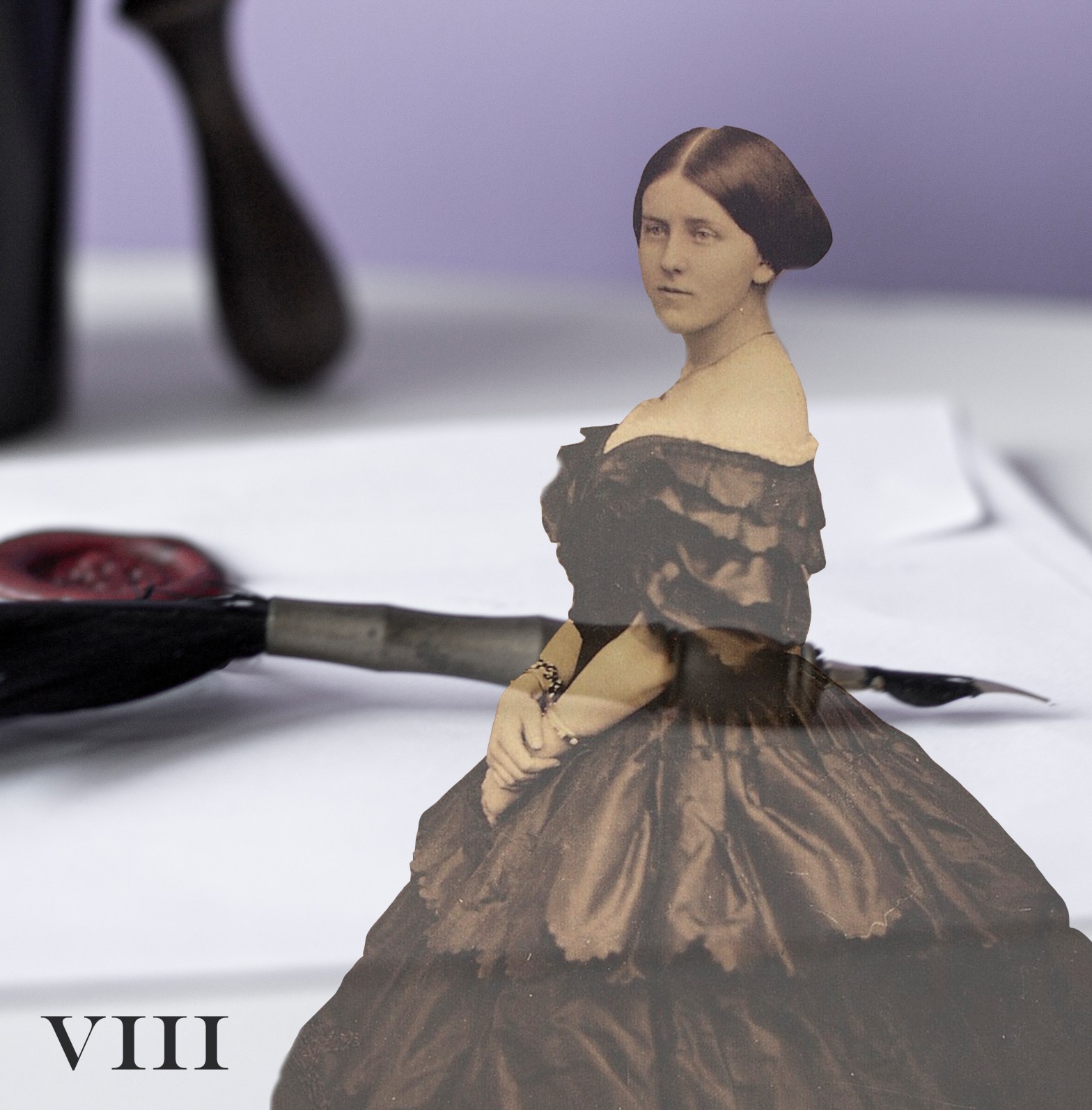
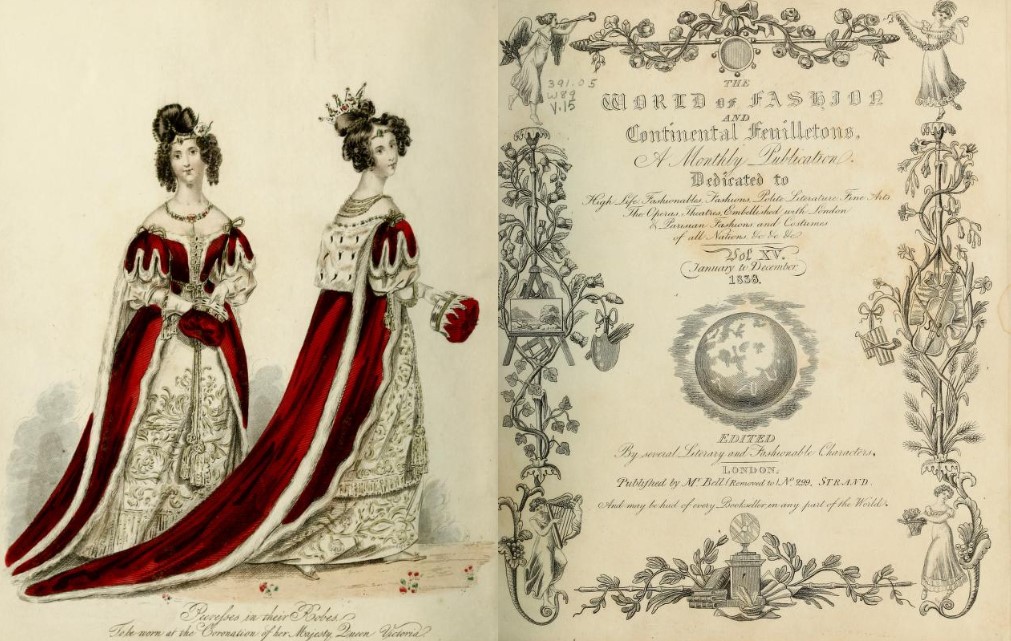

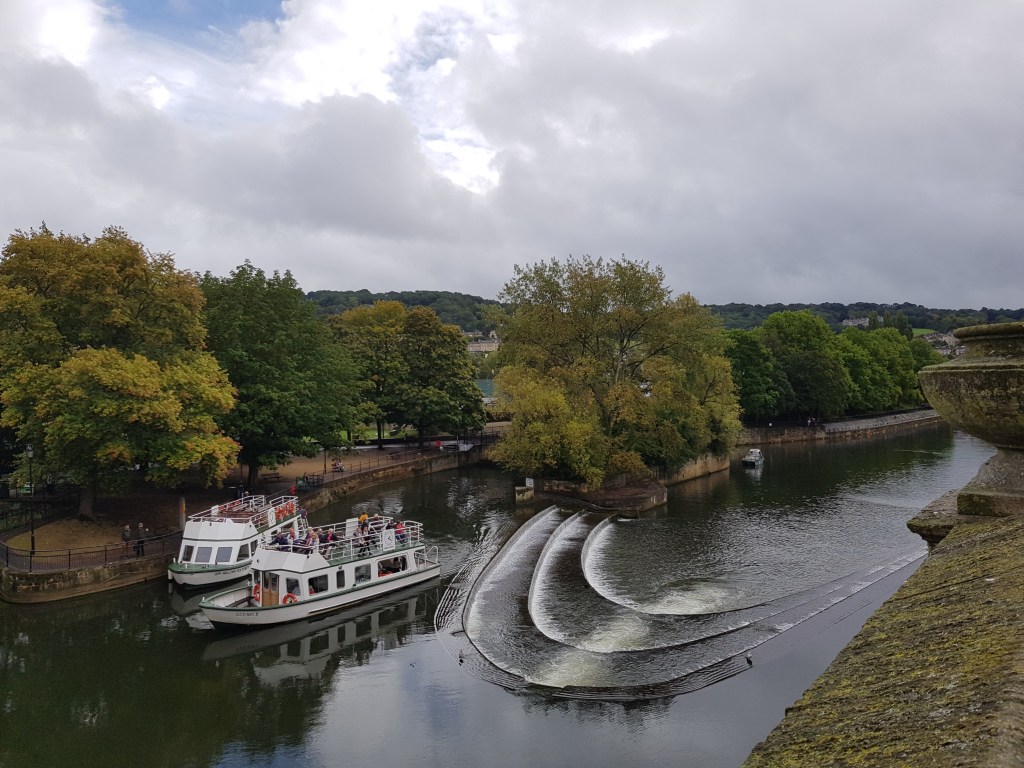

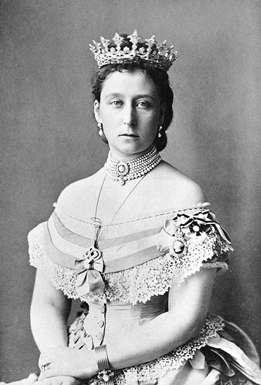
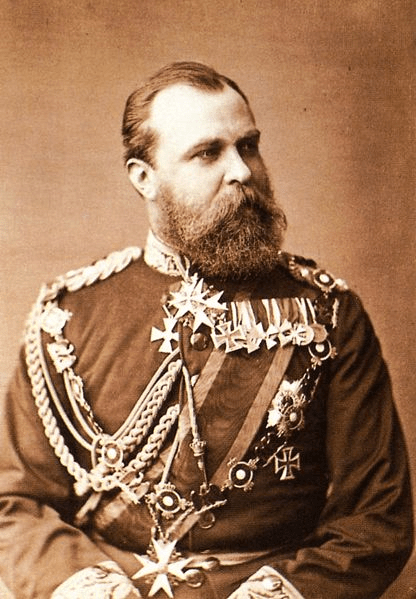
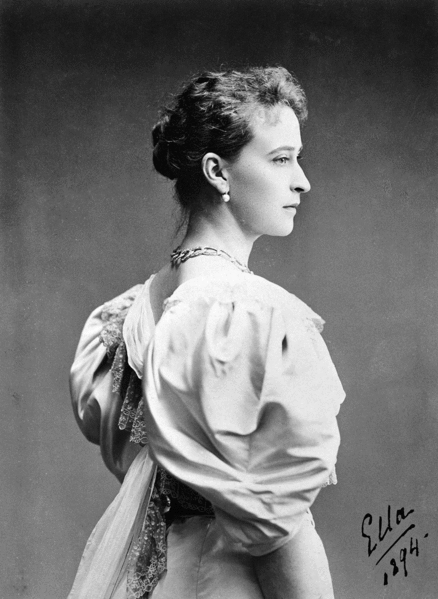
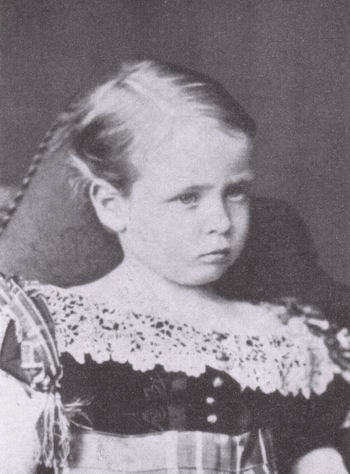
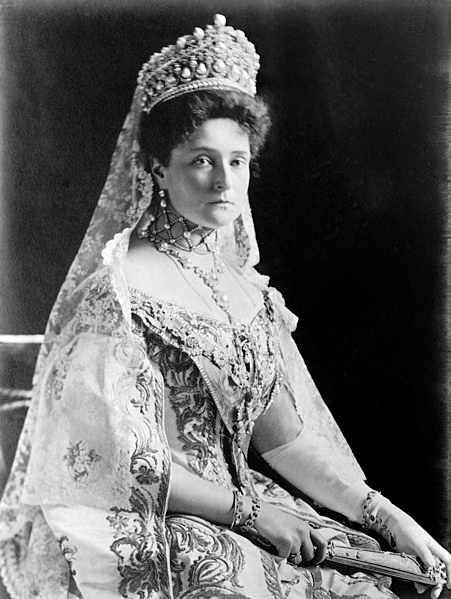
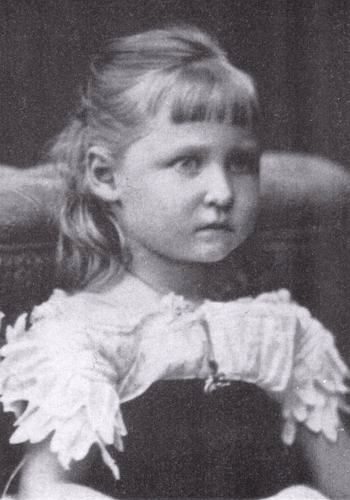
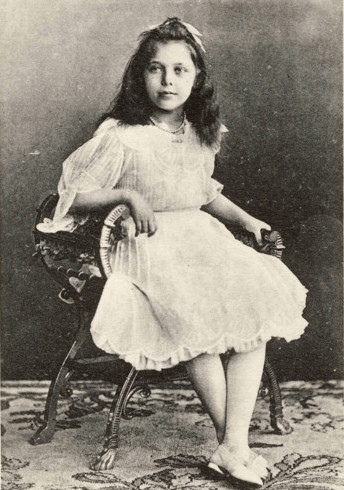
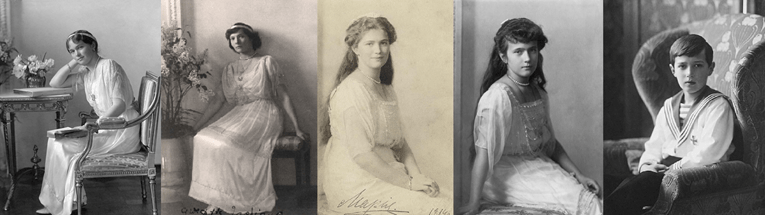
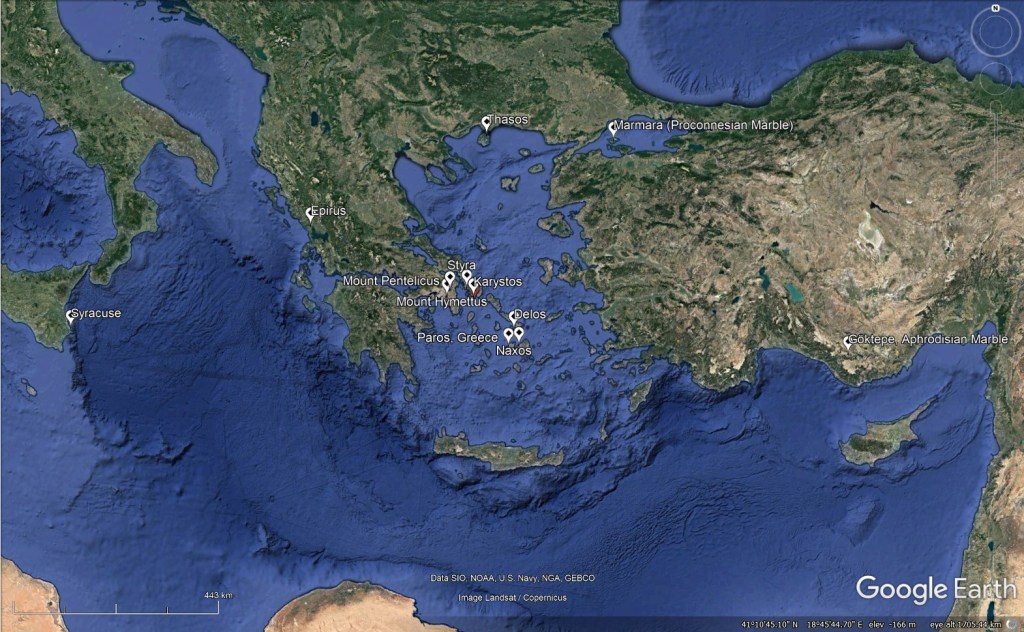
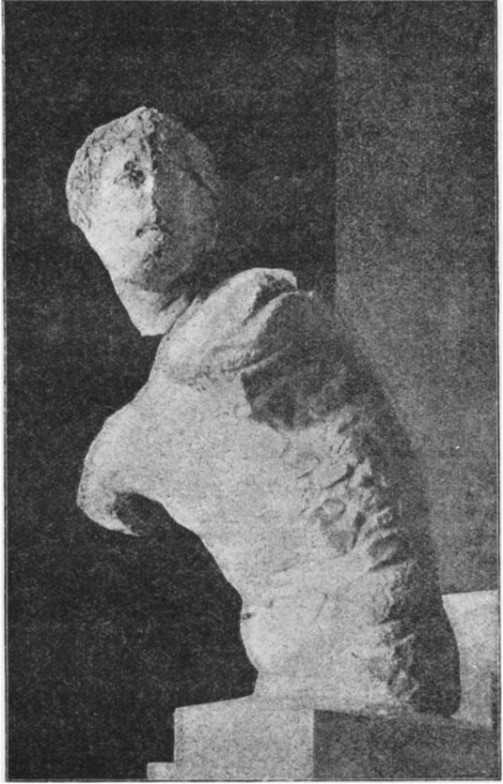
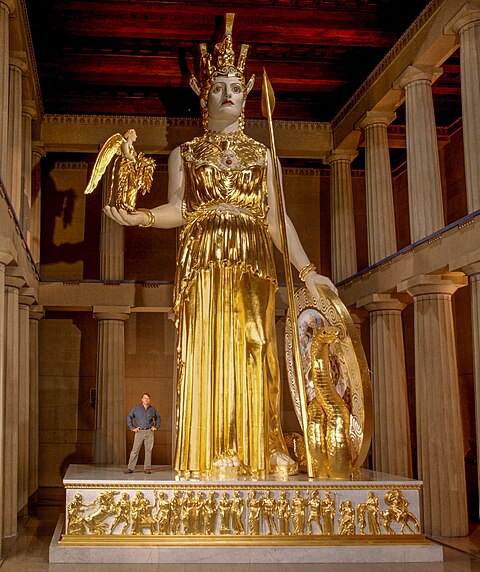
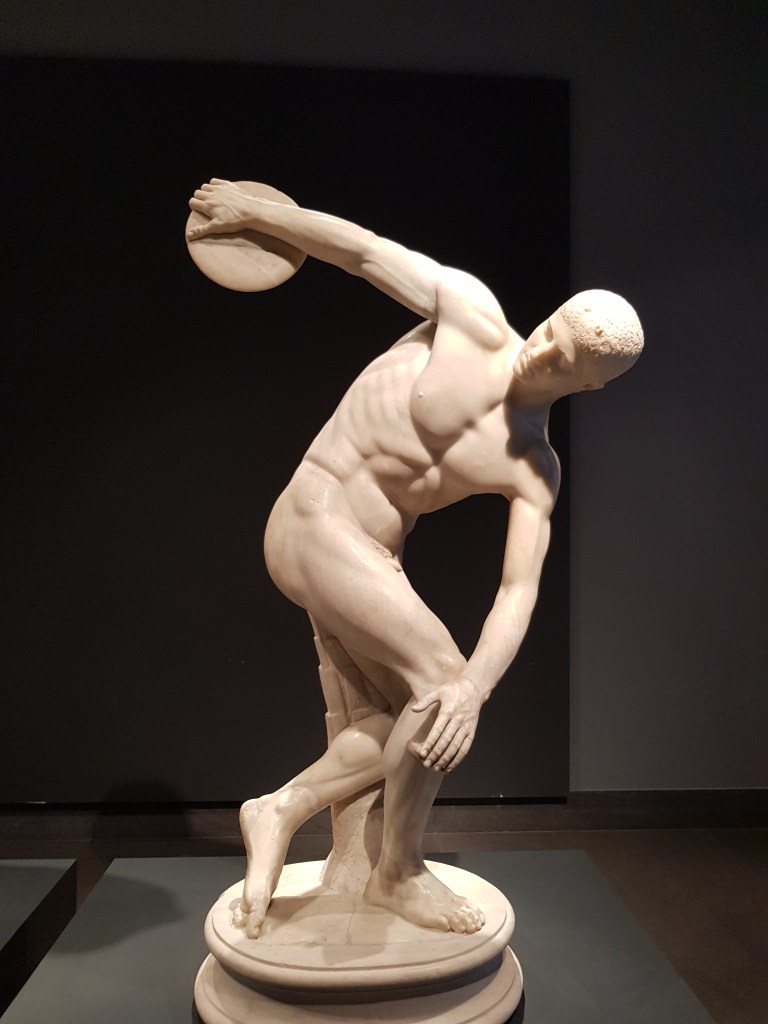
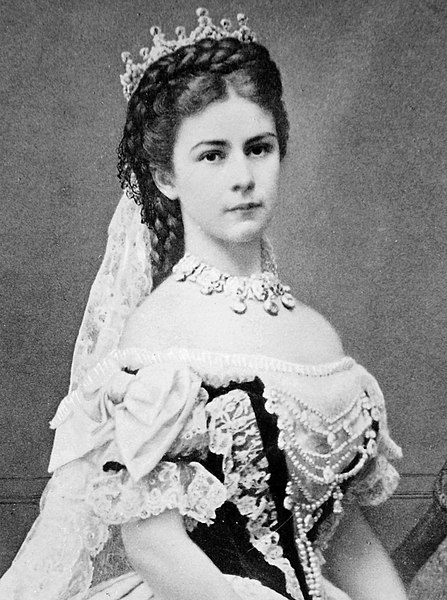

 The Historian Chronicles


